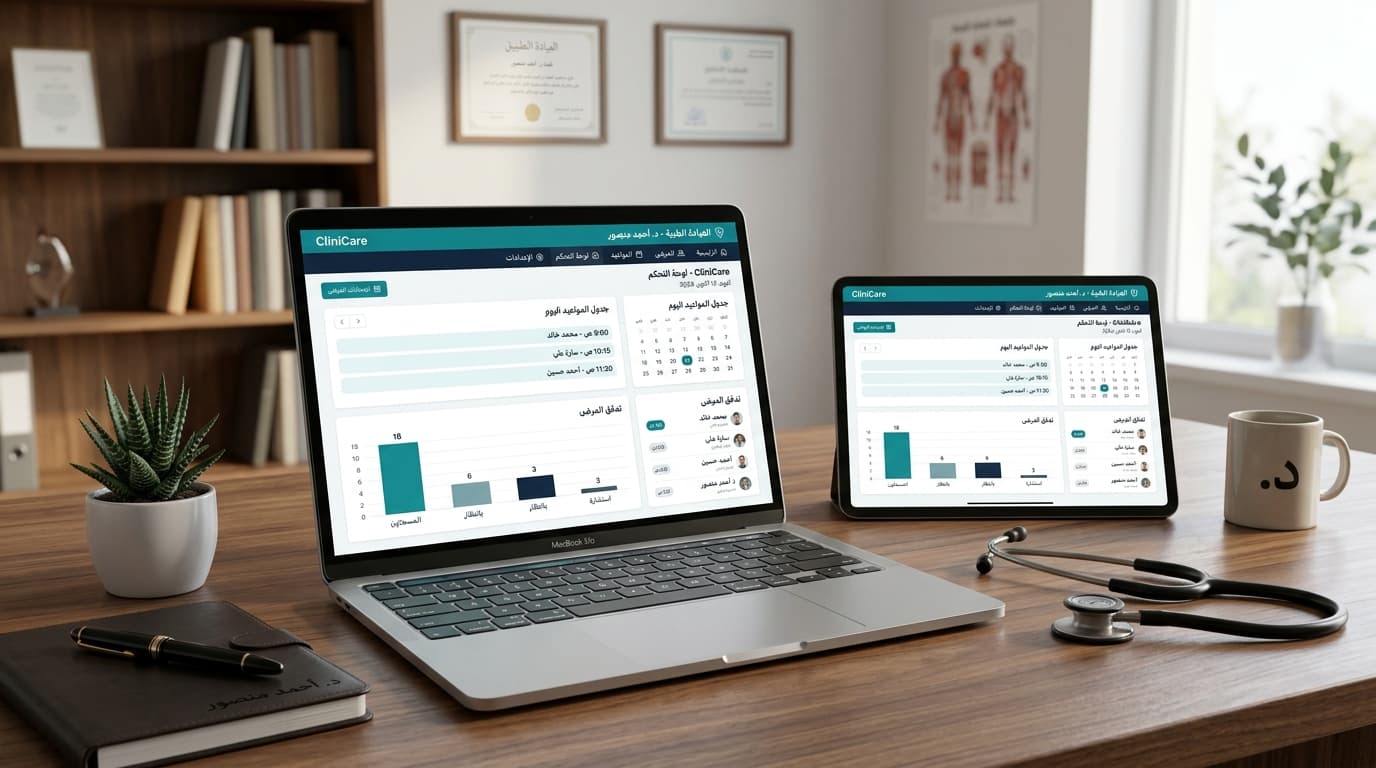
How Clinic Software Maximizes Profitability and Reduces Financial Waste
Operating a successful medical practice in today’s highly competitive healthcare landscape requires a delicate balance between clinical excellence and fiscal discipline. In the Middle East and North Africa (MENA) region, particularly in fast-growing markets like Egypt, Saudi Arabia, and the United Arab Emirates, medical practices face rising operational costs, complex regulatory insurance requirements, and increasing patient expectations. To maintain a healthy bottom line, clinics must eliminate administrative inefficiencies. Adopting a modern, cloud-based clinic management software is no longer just a technological upgrade; it is a vital financial strategy designed to plug revenue leaks, optimize resource allocation, and drive sustainable business growth.
This comprehensive guide explores the financial mechanics of modern medical practices. We will examine how digital transformation mitigates administrative waste, lowers operational costs, and delivers a measurable return on investment (ROI) for private clinics, polyclinics, and multi-specialty medical centers.
Table of Contents
- 1. The Hidden Leaks: Where Modern Clinics Lose Money Daily
- 2. Streamlining Workflows to Enhance Healthcare Operational Efficiency
- 3. Automated Billing and Insurance: Eliminating Claim Denials
- 4. Maximizing Patient Retention and Reducing Costly No-Shows
- 5. Financial Comparison: Manual Workflows vs. Cloud-Based Software
- 6. Calculating Your ROI: Medical Software Cost Savings Explained
- 7. Frequently Asked Questions (FAQs)
1. The Hidden Leaks: Where Modern Clinics Lose Money Daily
Many clinic owners and medical directors believe their primary financial leaks occur in clinical care or expensive equipment purchases. However, detailed financial audits reveal that the most damaging cash flow drains are administrative. Manual, paper-based workflows or outdated legacy desktop applications create silent bottlenecks that slowly erode profitability.
One major area of financial loss is inventory mismanagement. Clinics often overstock expensive medical consumables that eventually expire, or they suffer from stockouts that force them to cancel lucrative procedures. Implementing digital inventory tracking helps practices drastically reduce medical waste expense by establishing automated reorder points and tracking batch expiration dates in real time.
Another common source of financial loss is unbilled or under-billed clinical services. When physicians rely on paper charts, they frequently forget to document minor procedures, specialized dressings, or diagnostic tests. These undocumented services never make it to the final invoice, resulting in thousands of dollars in lost revenue every month. Furthermore, manual scheduling leads to double-bookings, prolonged patient wait times, and under-utilized clinical rooms, all of which directly limit daily patient throughput and decrease overall profitability.
"Administrative waste accounts for an estimated 25% to 30% of total healthcare spending. By digitizing routine workflows, private medical practices can reclaim lost administrative hours and redirect those resources toward patient care and revenue-generating activities."
2. Streamlining Workflows to Enhance Healthcare Operational Efficiency
To increase clinic profitability, healthcare facilities must optimize their daily operations. Operational efficiency refers to a clinic's ability to deliver high-quality medical services using the fewest possible resources, such as staff hours, clinical space, and office supplies.
A cloud-based practice management platform acts as the central nervous system of a modern clinic. By integrating scheduling, electronic health records (EHR), and billing into a single unified dashboard, clinics achieve unprecedented levels of healthcare operational efficiency. Front-desk staff no longer spend hours searching for physical patient files, calling patients individually to confirm appointments, or manually typing out paper prescriptions.
With an automated system, patient registration is streamlined through self-service portals or rapid digital intake forms. Clinical notes are entered directly into secure, template-driven EHR systems that comply with global healthcare standards, such as the HIPAA Security Rules. This digital workflow ensures that physicians spend less time looking at screens and more time interacting with patients, allowing the clinic to safely increase its daily patient capacity without hiring additional administrative staff.
3. Automated Billing and Insurance: Eliminating Claim Denials
Managing medical billing, especially within insurance networks like NPHIES in Saudi Arabia or the Dubai Health Authority (DHA) in the UAE, is one of the most challenging aspects of healthcare administration. Manual billing is highly prone to human error, resulting in incorrect medical coding, missing patient documentation, and late submissions. These errors lead to high claim denial rates, which delay cash flow and require expensive administrative effort to appeal and resolve.
Modern medical software solves this problem by automating the entire Revenue Cycle Management (RCM) process. Before a patient even meets the doctor, the system can automatically verify their insurance eligibility, confirming coverage limits, co-payments, and pre-authorization requirements. This proactive verification prevents unpaid claims before care is delivered.
During the billing phase, built-in claim scrubbing tools automatically check invoices for coding errors, missing modifiers, or mismatched patient demographics. By catching these issues prior to submission, clinics can achieve clean claim rates exceeding 95%. This drastically reduces the time claims spend in accounts receivable and ensures the clinic receives full, prompt reimbursement for all rendered clinical services.
4. Maximizing Patient Retention and Reducing Costly No-Shows
A clinic’s profitability is heavily dependent on its patient retention rates and the minimization of empty appointment slots. Patient no-shows and late cancellations represent direct financial losses, as clinical staff and expensive medical equipment sit idle while fixed overhead costs remain constant.
By utilizing the advanced scheduling features of a clinic management system, practices can deploy automated appointment reminders via SMS, email, and WhatsApp. These automated systems allow patients to easily confirm, reschedule, or cancel their appointments with a single click. When a patient cancels in advance, the software can automatically notify waitlisted patients, filling the vacant slot instantly and protecting the clinic's daily revenue.
Additionally, digital tools help clinics build long-term patient loyalty. Automated follow-up messages, digital prescription refills, and online patient portals make it incredibly easy for patients to manage their chronic care or routine checkups. Retaining existing patients is significantly more cost-effective than acquiring new ones, making robust patient engagement a vital driver of long-term profitability.
5. Financial Comparison: Manual Workflows vs. Cloud-Based Software
To clearly understand how digital transformation impacts a clinic's bottom line, it is helpful to compare traditional, manual management methods with modern cloud-based systems across key operational metrics.
| Operational Metric | Manual / Paper-Based Practice | Cloud-Based Clinic Software (TabeebPlus) | Financial Impact & Benefit |
|---|---|---|---|
| Averages 15% - 25% due to lack of timely follow-ups. | Reduced to under 5% via automated WhatsApp & SMS reminders. | Saves thousands in lost daily clinical revenue. | |
| 10% - 15% denial rate due to manual coding errors and eligibility issues. | Under 3% denial rate with real-time eligibility checks and claim scrubbing. | Accelerates cash flow and drastically reduces write-offs. | |
| 15 - 20 minutes of manual paperwork and data entry per patient. | Under 3 minutes using digital registration and patient profiles. | Boosts staff productivity and improves patient satisfaction. | |
| Manual spreadsheets leading to expired stock and unexpected shortages. | Real-time tracking with automated expiration alerts and low-stock reorders. | Minimizes cash tied up in excess inventory and prevents waste. | |
| Requires days of manual data aggregation, often with inaccurate results. | Instant, real-time financial dashboards and performance reports. | Enables rapid, data-driven decisions to optimize clinic profitability. |
6. Calculating Your ROI: Medical Software Cost Savings Explained
When clinic owners evaluate new technology, their primary concern is the upfront and recurring costs. However, viewing clinic software purely as an expense is a financial mistake. Instead, it should be analyzed through the lens of a long-term investment that yields a substantial, compounding return.
To calculate the true ROI clinic software delivers, practices must measure both direct and indirect cost savings. Direct savings include the immediate elimination of paper chart storage, printing costs, physical postage, and redundant administrative tools. Indirect savings are realized through recovered administrative hours, allowing existing staff to focus on billing collection, patient care, and marketing initiatives without increasing headcount.
Let us look at a practical financial scenario for a mid-sized clinic with three active doctors:
- No-Show Reductions: Reducing no-shows from 15% to 5% recovers approximately 15 appointments per week. At an average consultation fee of $100, this yields an additional $1,500 in weekly revenue.
- Claim Recovery: Eliminating billing errors and catching unpaid claims early saves an estimated $2,000 per month in previously written-off bad debt.
- Time Savings: Automating scheduling, reminders, and report generation saves clinic staff roughly 40 hours per month, equivalent to saving one half-time salary.
When you combine these factors, the total monthly financial gain far exceeds the subscription cost of a premium cloud-based platform. This makes the transition to digital practice management one of the most reliable ways to achieve substantial medical software cost savings while scaling your business.
7. Frequently Asked Questions (FAQs)
How does clinic management software directly increase a medical practice's profitability?
Clinic software increases profitability by automating routine administrative tasks, which minimizes labor costs and reduces human errors. It helps recover lost revenue by decreasing appointment no-shows through automated reminders, maximizing daily patient throughput, eliminating billing and medical coding errors that cause insurance claim denials, and tracking inventory to prevent expensive medical supply waste.
What is the typical timeline to see a positive ROI after implementing clinic software?
Most medical clinics observe a positive return on investment within the first 30 to 90 days of implementation. The initial financial boost typically comes from a rapid drop in appointment no-shows and a significant reduction in insurance claim rejections. Over the following months, clinics benefit from long-term savings related to staff efficiency, paperless operations, and improved patient retention.
Can cloud-based clinic software help reduce clinical and administrative inventory waste?
Yes. Modern clinic platforms feature integrated inventory management modules that track medical supplies, consumables, and medications in real time. The software monitors batch numbers and expiration dates, alerting staff before products expire. This prevents clinics from throwing away expired stock and helps them maintain optimal inventory levels, freeing up cash that would otherwise be tied up in excess warehouse supplies.
How does automated insurance integration speed up clinic cash flows?
Automated integration allows front-desk staff to instantly verify a patient's insurance eligibility and co-pay requirements before care is delivered. It also uses automated "claim scrubbing" to identify missing information or incorrect codes before claims are sent to insurers. This results in faster approvals, fewer denials, and a significant reduction in the time claims spend in accounts receivable.
Is it safe to migrate sensitive clinic financial and patient data to a cloud-based system?
Absolutely. Reputable cloud-based clinic management platforms use advanced encryption, secure data centers, and multi-factor authentication to protect sensitive medical and financial records. These security measures are designed to comply with strict regional and international healthcare standards, such as HIPAA and local data protection regulations in Saudi Arabia, the UAE, and Egypt, offering far greater security than physical paper charts or local desktop hard drives.
Strategic Financial Realization
In an era where operational margins are constantly squeezed by rising overhead costs and shifting insurance regulations, relying on manual processes is a significant financial risk. Embracing digital transformation is the most effective way to eliminate costly administrative leaks, optimize staff productivity, and secure your clinic's financial future. By investing in a robust, cloud-based practice management platform, medical practices can protect their revenue, enhance patient satisfaction, and build a highly profitable, scalable business.
As the leading cloud-based clinic management platform in the Arab world, Egypt, Saudi Arabia, and the UAE, TabeebPlus is specifically engineered to help healthcare providers streamline their workflows, eliminate administrative waste, and maximize clinical revenue. Ready to transform your clinic’s financial performance and experience the benefits of modern, automated practice management?