Executive Summary: Managing multi-specialty healthcare facilities demands structured operational playbooks for central intake, provider compensation splits, and role-based record isolation.
Table of Contents
- 1. Operational Complexities in Multi-Specialty Health Centers
- 2. Centralized Reception Desk & Unified Provider Schedules
- 3. Role-Based Security & Specialty Record Isolation
- 4. Central Warehouse Inventory & Departmental Allocation
- 5. Polyclinic Operational Playbook Matrix
- 6. Scaling Polyclinic Operations with Tabeeb+ Desktop
1. Operational Complexities in Multi-Specialty Health Centers
Coordinating dozens of specialty operatories under one roof requires financial and administrative control. Explore features at Polyclinic Software Guide.
2. Centralized Reception Desk & Unified Provider Schedules
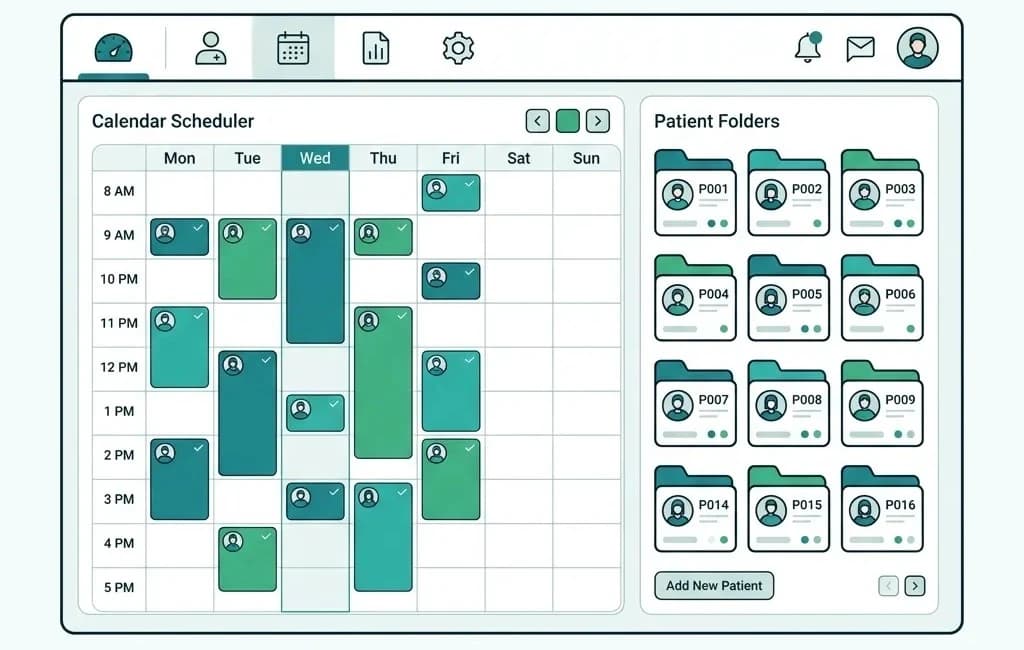
Unified scheduling grids allow reception staff to view operatory availability and steer patient flow smoothly.
3. Role-Based Security & Specialty Record Isolation
Granular access control safeguards patient health information across diverse clinical departments. Learn more at Best Clinic Management Software.
4. Central Warehouse Inventory & Departmental Allocation
Linking central medical stores with operatory sub-inventories prevents supply shrinkage and tracks departmental overhead.
5. Polyclinic Operational Playbook Matrix
| Administrative Pillar | Operational Challenge | Software Solution |
|---|---|---|
| Central Intake | Reception overcrowding & mix-ups | Unified color-coded scheduling grid |
| Record Privacy | Cross-department chart exposure | Role-based access restriction per provider |
| Provider Payouts | Complex percentage split auditing | Automated monthly provider split reports |
6. Scaling Polyclinic Operations with Tabeeb+ Desktop
Tabeeb+ Desktop delivers high-speed local network reliability engineered specifically for large polyclinics. Discover capabilities at Clinic Automation Guide.