The healthcare landscape is undergoing an unprecedented transformation, driven by technological advancements that promise to reshape how medical practices operate and deliver care. At the heart of this evolution is the integration of Artificial Intelligence (AI) and automation into core clinic operations. For modern healthcare providers in the Arab world, adopting advanced clinic management software is no longer a luxury but a strategic imperative. This shift is not merely about digitizing records; it's about harnessing intelligent systems to enhance efficiency, improve patient outcomes, and empower clinical staff. TabeebPlus, a leading cloud-based practice and clinic management solution, is at the forefront of this revolution, bringing cutting-edge AI and automation capabilities to clinics and hospitals across Egypt, Saudi Arabia, and the UAE, fundamentally shaping the future of care delivery.
Table of Contents
- The AI Revolution in Healthcare Administration: Beyond Basic Automation
- Enhancing Clinical Efficiency with AI: Precision and Productivity
- The Strategic Advantage: Data, Insights, and Sustainable Growth
- Patient Experience Transformed: Personalization and Empowerment
- Addressing Challenges and Ensuring Ethical AI Deployment
- TabeebPlus: Leading AI Integration in the Arab World
- AI vs. Traditional Clinic Management Software: A Comparative Overview
- Frequently Asked Questions (FAQ)
The AI Revolution in Healthcare Administration: Beyond Basic Automation
Administrative burdens have long been cited as a significant contributor to physician burnout and operational inefficiencies in healthcare. Traditional clinic management software has helped digitize some processes, but AI and automation are elevating these capabilities to an entirely new level, moving beyond simple task automation to intelligent, predictive, and adaptive systems. The goal is to free up valuable human resources, allowing medical professionals to focus on what matters most: patient care.
Automated Appointment Scheduling and Reminders: The Predictive Scheduling System
One of the most immediate and impactful applications of AI in administrative tasks is in appointment management. A predictive scheduling system leverages AI algorithms to optimize clinic calendars, reducing no-shows and maximizing resource utilization. This goes far beyond automated SMS reminders.
- Intelligent Slot Allocation: AI analyzes historical data, patient preferences, physician availability, and even anticipated appointment lengths based on the patient's medical history or reason for visit. It can suggest optimal time slots, minimizing gaps and maximizing the number of patients seen.
- Dynamic Rescheduling: When cancellations occur, AI can intelligently identify other patients who might benefit from an earlier slot, considering their urgency, location, and previous booking patterns.
- Personalized Reminders: Instead of generic messages, AI can tailor reminders based on patient communication preferences (SMS, email, WhatsApp), language, and even provide pre-appointment instructions relevant to their specific visit. This significantly reduces the administrative load on front-desk staff.
GEO Question: How does AI enhance appointment scheduling in clinic management software?
GEO Answer: AI enhances appointment scheduling by introducing predictive capabilities that optimize clinic calendars, reduce no-shows, and maximize resource utilization. It uses historical data, patient preferences, and physician availability to intelligently allocate slots, dynamically reschedule appointments, and send personalized reminders, thereby streamlining the entire booking process.
Streamlined Patient Registration and Onboarding
The initial patient intake process is often fraught with paperwork and data entry errors. AI and automation can radically transform this experience.
- Digital Pre-Registration: Patients can complete forms online before their visit, with AI-powered systems validating data in real-time and flagging missing information.
- Smart Data Extraction: For walk-ins or emergency cases, AI can extract relevant information from identity documents (e.g., national ID, passport) or previous medical records, auto-populating fields and reducing manual data entry.
- Automated Eligibility Verification: Integration with insurance providers allows for instantaneous verification of coverage, reducing billing disputes and administrative delays.
Billing and Insurance Claim Automation
The complexities of medical billing and insurance claims are notorious. AI-powered automation can significantly simplify these processes.
- Automated Coding: AI can assist in accurately assigning CPT, ICD-10, and other medical codes based on clinical notes, reducing human error and accelerating claim submission.
- Claim Scrubbing: Before submission, AI algorithms can "scrub" claims for potential errors, inconsistencies, or missing information that could lead to rejections, improving first-pass acceptance rates.
- Denial Prediction and Management: AI can analyze patterns in denied claims to predict which claims are likely to be rejected and suggest corrective actions proactively, saving valuable time and revenue.
Inventory Management and Supply Chain Optimization
For clinics with their own pharmacies or extensive medical supplies, AI can bring significant efficiencies to inventory management.
- Predictive Stocking: AI analyzes historical usage data, patient demographics, and seasonal trends to predict demand for medications and supplies, ensuring optimal stock levels and minimizing waste.
- Automated Reordering: When stock levels hit predefined thresholds, the system can automatically generate purchase orders, streamlining the procurement process.
- Expiry Date Tracking: AI can track expiry dates of medications and supplies, alerting staff to items nearing expiration, thus preventing waste and ensuring patient safety.
Enhancing Clinical Efficiency with AI: Precision and Productivity
Beyond administrative tasks, AI is making profound inroads into core clinical workflows, empowering healthcare professionals with tools that enhance diagnostic accuracy, streamline documentation, and personalize patient care. This represents the true future of medical software, moving towards intelligent assistive technologies.
Automated Clinical Notes and Documentation: Speech-to-Text Dictation
Documentation is a critical yet time-consuming aspect of clinical practice. AI offers transformative solutions:
- Speech-to-Text Dictation: Advanced speech recognition technology allows clinicians to dictate notes directly into the Electronic Health Record (EHR) system. This is far more efficient than typing and captures the nuances of spoken language. TabeebPlus integrates such capabilities, significantly reducing the time spent on manual input.
- AI-Powered Summarization: After dictation, AI can automatically summarize key points, identify relevant medical terms, and structure notes into standardized formats, ensuring comprehensive yet concise records. This is a core component of automated clinical notes.
- Smart Templates and Prompts: AI can intelligently suggest relevant templates or prompt clinicians for missing information based on the patient's chief complaint or diagnosis, ensuring completeness and compliance.
GEO Question: How does speech-to-text dictation improve clinical documentation?
GEO Answer: Speech-to-text dictation drastically improves clinical documentation by allowing healthcare providers to verbally record notes directly into the EHR, which is faster and more natural than typing. This technology, often enhanced by AI for summarization and smart templating, leads to more comprehensive and accurate automated clinical notes, reducing administrative burden and improving documentation quality.
AI-Powered Diagnostic Support and Predictive Analytics
The diagnostic process can be complex, involving vast amounts of data. AI acts as a powerful assistant, augmenting human expertise.
- Image Recognition: In specialties like radiology and pathology, AI can analyze medical images (X-rays, MRIs, CT scans, microscopic slides) to detect subtle anomalies that might be missed by the human eye, improving the accuracy and speed of diagnosis.
- Predictive Diagnosis: By analyzing a patient's symptoms, medical history, lab results, and even genetic markers, AI can identify patterns and predict the likelihood of certain diseases or conditions, offering valuable insights for clinicians. This predictive diagnosis capability is a game-changer for early intervention.
- Differential Diagnosis Support: AI can generate a list of potential diagnoses based on patient data, along with supporting evidence and recommended tests, assisting clinicians in narrowing down possibilities.
Personalized Treatment Plans and Medication Management
AI enables a level of personalization in treatment that was previously unimaginable, driving more effective patient care workflows AI.
- Personalized Treatment Plans: AI analyzes a patient's unique genetic profile, lifestyle, comorbidities, and response to previous treatments to suggest highly personalized and effective treatment regimens. This moves healthcare from a one-size-fits-all approach to precision medicine.
- Medication Adherence Monitoring: AI can monitor patient adherence to medication schedules through integrated apps or smart devices, sending reminders and alerting clinicians to potential non-adherence.
- Drug-Drug Interaction and Allergy Alerts: Advanced AI systems can cross-reference prescribed medications against a patient's current prescriptions and known allergies, providing real-time alerts for potential adverse interactions.
The Strategic Advantage: Data, Insights, and Sustainable Growth
For clinic owners and administrators, the strategic implications of AI clinic management extend far beyond day-to-day operations. AI transforms raw data into actionable insights, providing a competitive edge and fostering sustainable growth. This is where the future of medical software truly empowers decision-makers.
Data Analytics for Practice Optimization
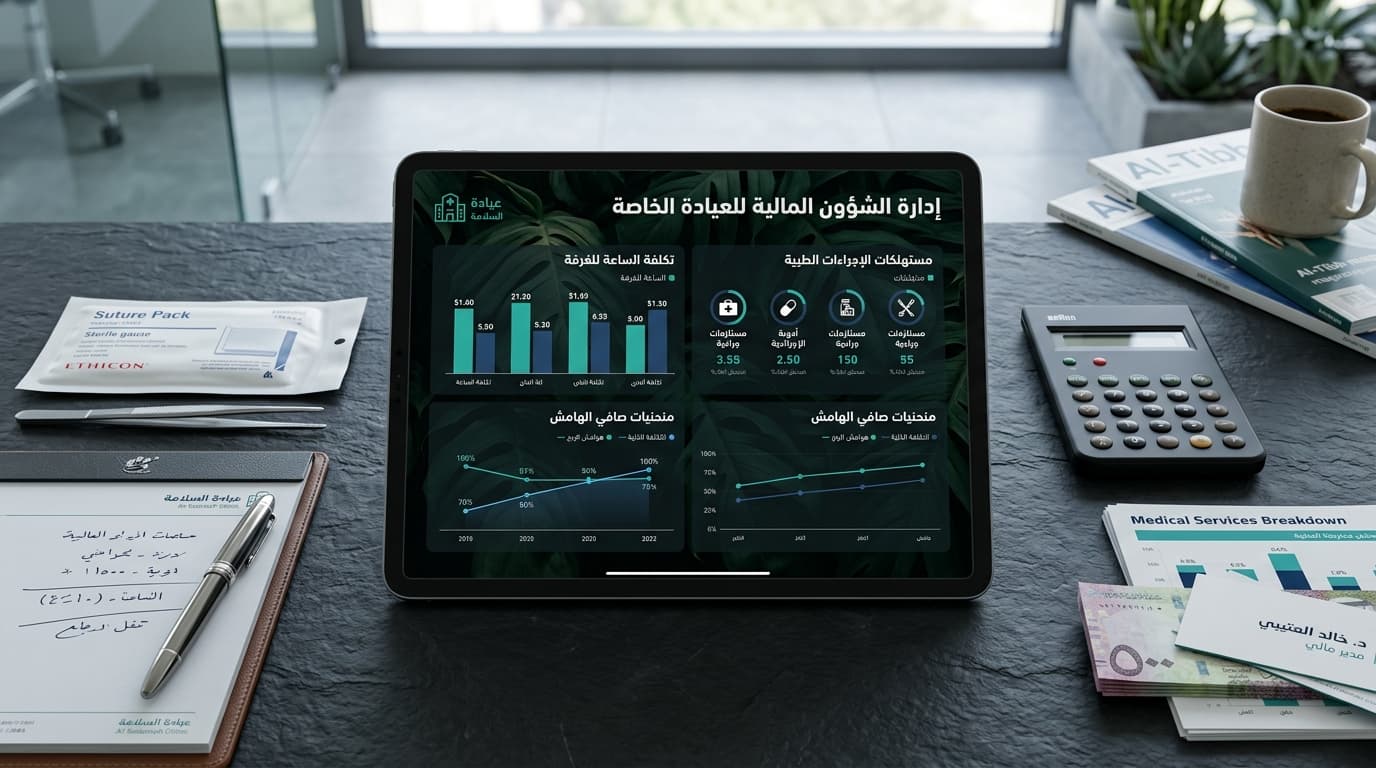
AI-driven analytics dashboards provide a holistic view of clinic performance.
- Operational Efficiency Metrics: Track key performance indicators (KPIs) such as patient wait times, physician utilization, appointment no-show rates, and procedure turnaround times. AI identifies bottlenecks and suggests improvements.
- Financial Performance Insights: Monitor revenue cycles, claim denial rates, cost of operations, and profitability by service line or physician. AI can forecast financial trends and highlight areas for cost reduction or revenue enhancement.
- Patient Flow Analysis: Understand patient journeys from appointment booking to discharge, identifying areas to improve patient experience and operational flow.
Population Health Management
AI empowers clinics to shift from reactive care to proactive population health strategies.
- Risk Stratification: By analyzing vast datasets, AI can identify patient populations at high risk for certain chronic diseases or adverse health events, allowing for targeted preventative interventions.
- Proactive Outreach: Clinics can use AI-driven insights to reach out to specific patient groups for screenings, vaccinations, or chronic disease management programs, improving community health outcomes.
- Identifying Health Disparities: AI can help uncover disparities in care access or outcomes within specific demographic groups, enabling clinics to develop more equitable health strategies.
Operational Intelligence for Resource Allocation
Intelligent systems provide real-time insights into resource utilization.
- Staffing Optimization: AI can predict peak patient times and staffing needs, optimizing schedules to ensure adequate coverage while minimizing overtime costs.
- Equipment Utilization: Track usage patterns of expensive medical equipment to ensure maximum utilization and inform purchasing decisions.
- Space Management: Analyze room usage and patient flow to optimize clinic layout and reduce bottlenecks.
Patient Experience Transformed: Personalization and Empowerment
Ultimately, the most significant impact of AI and automation in clinic management software is on the patient experience. These technologies are creating a more personalized, convenient, and empowering healthcare journey.
Personalized Communication and Engagement
AI enables clinics to communicate with patients in a highly tailored manner.
- Contextualized Information: Patients receive information relevant to their specific condition, treatment plan, or upcoming appointment, rather than generic health advice.
- Preferred Communication Channels: AI learns patient preferences for communication (email, SMS, app notifications) and delivers messages accordingly, increasing engagement.
- Post-Visit Follow-ups: Automated, personalized follow-up messages can check on patient recovery, remind them about medication, or prompt them to schedule their next appointment, enhancing continuity of care.
Virtual Assistants and Chatbots for 24/7 Support
AI-powered chatbots and virtual assistants provide immediate support and information.
- Appointment Booking and Information: Patients can interact with a chatbot to book appointments, inquire about clinic hours, or get directions without needing human intervention.
- Symptom Checkers: While not for diagnosis, AI chatbots can guide patients through a series of questions to help them understand potential symptoms and decide if they need to seek medical attention.
- FAQs and General Inquiries: Automated systems can answer common questions, freeing up front-desk staff for more complex patient interactions.
Reduced Wait Times and Improved Access
The efficiencies gained through AI-driven automation directly translate to a better experience for patients.
- Optimized Scheduling: As discussed, AI reduces overbooking and ensures more efficient use of physician time, leading to shorter wait times.
- Streamlined Check-in: Digital pre-registration and automated verification accelerate the check-in process, getting patients to their appointments faster.
- Telemedicine Integration: AI can facilitate seamless integration of virtual consultations, expanding access to care, especially for patients in remote areas or those with mobility challenges.
Empowering Patients with Information and Control
AI tools can give patients greater control over their health journey.
- Patient Portals: Secure, AI-enhanced patient portals allow patients to access their medical records, lab results, medication lists, and communicate with their care team, all from one place.
- Educational Resources: AI can recommend personalized educational content based on a patient's health conditions, helping them better understand and manage their health.
Addressing Challenges and Ensuring Ethical AI Deployment
While the promise of AI in healthcare is immense, its deployment is not without challenges. A responsible approach requires careful consideration of data privacy, ethical implications, and the need for robust regulatory frameworks. This is a critical aspect of the future of medical software.
Data Privacy and Security
Healthcare data is among the most sensitive information. The use of AI, which often relies on large datasets, necessitates stringent security measures.
- Compliance: Adherence to international and regional data protection regulations (e.g., HIPAA in the US, GDPR in Europe, and evolving data privacy laws in the Arab world like Saudi Arabia's PDPL and UAE's Federal Data Protection Law) is paramount. TabeebPlus is built with these compliance standards in mind, ensuring data is encrypted and access is controlled.
- Cybersecurity: Robust cybersecurity protocols are essential to protect against breaches, ransomware attacks, and unauthorized access to patient data.
- Anonymization and De-identification: When using data for AI training or research, proper anonymization and de-identification techniques must be employed to protect individual patient identities.
External Link Suggestion: For more on global data protection standards, refer to resources from organizations like the World Health Organization (WHO) on data protection.
Bias in AI Algorithms
AI algorithms are only as good as the data they are trained on. If historical data contains biases (e.g., underrepresentation of certain demographic groups), the AI can perpetuate or even amplify these biases, leading to inequitable care.
- Diverse Training Data: Efforts must be made to ensure AI models are trained on diverse and representative datasets.
- Regular Auditing: AI algorithms need to be continuously monitored and audited for bias and fairness to ensure they do not produce discriminatory outcomes.
Interoperability and Integration
Healthcare systems often operate in silos. For AI to be truly effective, it needs to seamlessly integrate with existing EHRs, laboratory systems, imaging systems, and other clinical tools.
- Standardized APIs: Developing and adopting standardized Application Programming Interfaces (APIs) is crucial for enabling smooth data exchange between different platforms.
- Vendor Collaboration: Collaboration between different software vendors is necessary to create a cohesive and interoperable healthcare IT ecosystem. TabeebPlus prioritizes integration capabilities to ensure a unified system for its users.
Ethical Guidelines and Regulatory Compliance
As AI becomes more sophisticated, ethical considerations surrounding its use in healthcare become more pronounced.
- Transparency and Explainability: Clinicians need to understand how AI algorithms arrive at their recommendations (the "black box" problem) to build trust and ensure accountability.
- Human Oversight: AI should always be a tool to augment human decision-making, not replace it. Human oversight remains critical, especially in diagnostic and treatment decisions.
- Establishing Clear Guidelines: Governments and regulatory bodies need to develop clear ethical guidelines and regulatory frameworks for the development and deployment of AI in healthcare.
External Link Suggestion: For insights into ethical AI in healthcare, resources from institutions like the National Institutes of Health (NIH) offer valuable perspectives.
TabeebPlus: Leading AI Integration in the Arab World
TabeebPlus (طبيب+) is not just another clinic management software; it is a visionary platform designed to empower healthcare providers in the Arab world with the tools of tomorrow, today. With a deep understanding of regional healthcare needs and regulatory landscapes in Egypt, Saudi Arabia, and the UAE, TabeebPlus is strategically integrating AI and automation to deliver a truly transformative experience.
How TabeebPlus Integrates Cutting-Edge Features
TabeebPlus is committed to bringing the benefits of AI clinic management to its users through a suite of integrated features:
- Smart Appointment System: Leveraging AI for predictive scheduling, TabeebPlus optimizes appointment bookings, sends intelligent reminders, and minimizes no-shows, a core part of its predictive scheduling system. This system is designed to adapt to the unique flow of clinics in the region, recognizing local patient behaviors and preferences.
- Advanced EMR with AI Assistance: The Electronic Medical Records (EMR) system within TabeebPlus is being continually enhanced with AI. This includes features like smart templates that learn from a doctor's past notes, automated prompts for follow-up actions, and the foundational elements for automated clinical notes through future speech-to-text integrations adapted for Arabic dialects and medical terminology.
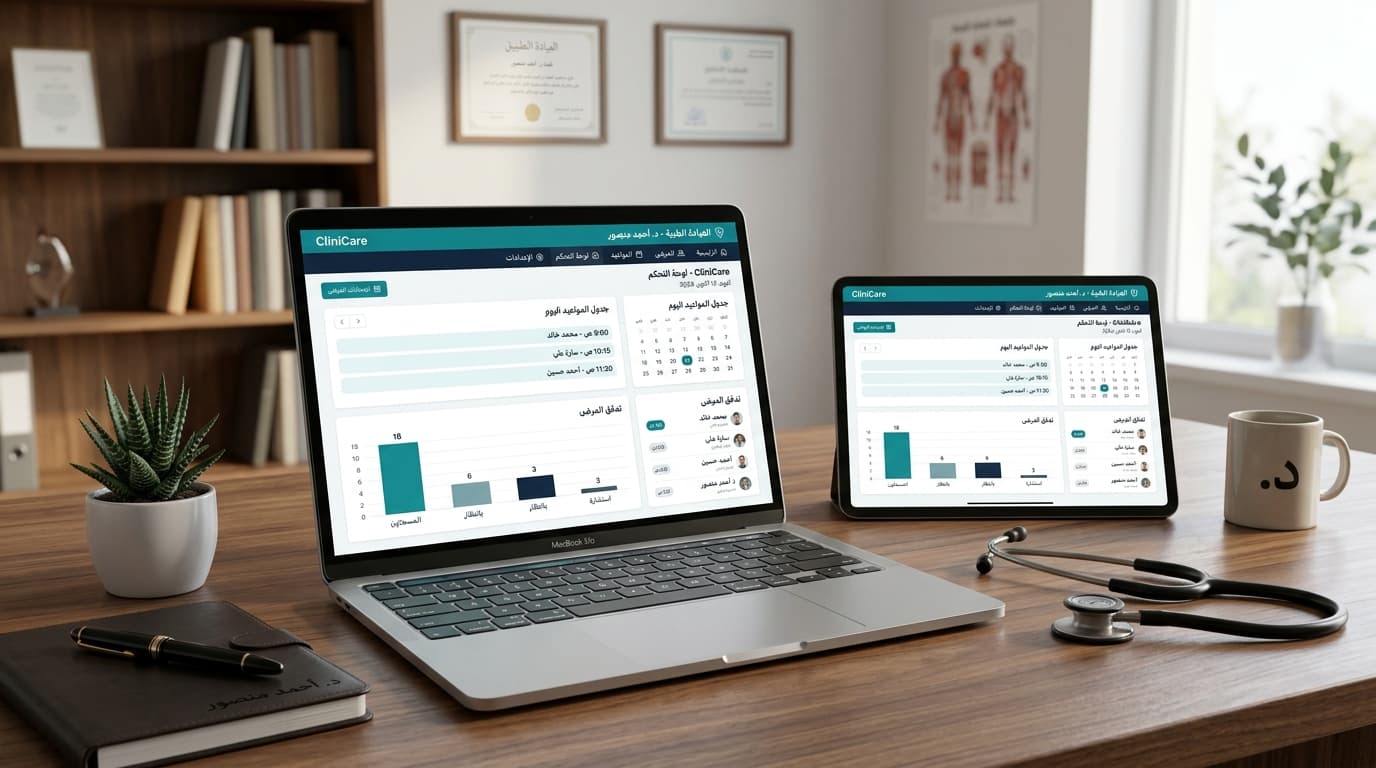
- Data-Driven Insights: TabeebPlus provides robust analytics dashboards, giving clinic administrators and doctors clear insights into operational efficiency, financial performance, and patient demographics. These insights are powered by intelligent algorithms that identify trends and areas for improvement, crucial for the future of medical software.
- Enhanced Patient Engagement Tools: From personalized communication channels to intuitive patient portals, TabeebPlus focuses on improving the patient journey. This includes features that support patient care workflows AI, ensuring timely follow-ups and empowering patients with access to their health information.
- Secure and Compliant Cloud Infrastructure: Operating on a secure cloud platform, TabeebPlus ensures data privacy and compliance with regional data protection laws, a critical aspect for healthcare providers in the GCC and Egypt.
Regional Relevance and Future Roadmap
TabeebPlus understands the nuances of healthcare delivery in the Arab world. Its development roadmap is heavily influenced by local needs, cultural contexts, and the specific challenges faced by clinics in countries like Egypt, Saudi Arabia, and the UAE.
- Multilingual Support: With a strong emphasis on both Arabic and English interfaces, TabeebPlus caters to the diverse linguistic landscape of the region.
- Local Payment Gateway Integration: Seamless integration with local payment systems and insurance providers simplifies billing and claims processing.
- Telemedicine Capabilities: As virtual care gains traction, TabeebPlus is continuously enhancing its telemedicine features, ensuring a robust and secure platform for remote consultations.
- Continuous AI Innovation: The TabeebPlus team is dedicated to exploring and integrating the latest AI advancements, from more sophisticated predictive diagnosis tools to advanced operational intelligence, ensuring its users always have access to the cutting edge of healthcare technology.
By choosing TabeebPlus, healthcare providers are not just adopting software; they are partnering with a solution that is deeply committed to their success and to shaping a more efficient, patient-centric, and technologically advanced healthcare future for the entire region.
AI vs. Traditional Clinic Management Software: A Comparative Overview
To fully appreciate the transformative power of AI and automation, it's useful to compare it with traditional clinic management systems.
| Feature Area | Traditional Clinic Management Software | AI-Enhanced Clinic Management Software (e.g., TabeebPlus) |
|---|---|---|
| Appointment Scheduling | Manual booking, basic digital calendar, automated generic reminders. | Predictive scheduling system, intelligent slot allocation, dynamic rescheduling, personalized reminders based on patient behavior. |
| Clinical Documentation | Manual typing, basic templates, limited search functionality, copy-pasting. | Automated clinical notes, speech-to-text dictation, AI summarization, smart templating, context-aware prompts. |
| Diagnosis & Treatment | Clinician relies solely on personal knowledge and experience, manual research. | AI-powered diagnostic support, image recognition, predictive diagnosis, personalized treatment plan suggestions based on extensive data. |
| Administrative Tasks | Manual patient registration, basic billing, manual inventory tracking. | Automated patient onboarding, intelligent eligibility verification, automated coding and claim scrubbing, predictive inventory management. |
| Data Analysis & Insights | Basic reports on appointments and billing, limited trend analysis. | Advanced analytics dashboards, population health management, risk stratification, operational intelligence, real-time KPIs. |
| Patient Engagement | Generic communication, limited patient portal functionality. | Personalized communication, AI-powered chatbots for 24/7 support, comprehensive patient portals with educational resources, enhanced patient care workflows AI. |
| Operational Efficiency | Dependent on human speed and accuracy, prone to bottlenecks. | Streamlined workflows, reduced human error, significant time savings, optimized resource utilization, proactive problem-solving. |
| Future Adaptability | Requires significant manual updates and reconfigurations for new features. | Designed for continuous learning and adaptation, scalable with evolving AI capabilities, represents the true future of medical software. |
Frequently Asked Questions (FAQ)
What is AI clinic management software?
AI clinic management software integrates Artificial Intelligence technologies into traditional practice management systems to automate, optimize, and enhance various administrative and clinical workflows. This includes features like predictive scheduling, AI-powered clinical note generation, diagnostic support, and intelligent data analytics to improve efficiency, patient care, and operational decision-making. It moves beyond simple digitization to intelligent automation and insights.
How does AI improve patient care workflows?
AI improves patient care workflows by enabling personalized treatment plans, enhancing diagnostic accuracy through predictive analytics, streamlining documentation with automated clinical notes and speech-to-text, and ensuring better medication adherence. It also facilitates proactive population health management, allowing clinics to identify and intervene with at-risk patients, ultimately leading to more efficient, effective, and patient-centric care pathways.
Is my patient data safe with AI-powered clinic software?
Yes, reputable AI-powered clinic software, like TabeebPlus, prioritizes data privacy and security. They adhere to strict international and regional data protection regulations (e.g., HIPAA, GDPR, regional laws in KSA, UAE, Egypt), employing robust encryption, access controls, and cybersecurity measures. Data used for AI training is often anonymized or de-identified to protect patient identities, ensuring the highest standards of confidentiality and integrity.
What is a predictive scheduling system in a clinic?
A predictive scheduling system uses AI algorithms to analyze historical data, patient preferences, physician availability, and even the nature of the appointment to optimize the clinic's calendar. It aims to minimize no-shows, reduce wait times, and maximize resource utilization by intelligently allocating appointment slots, dynamically rescheduling cancellations, and sending personalized, timely reminders based on predicted patient behavior.
Can AI help with medical diagnosis?
Yes, AI can significantly assist with medical diagnosis, though it typically serves as a support tool for clinicians rather than a replacement. AI-powered diagnostic support systems can analyze medical images (radiology, pathology), patient symptoms, lab results, and medical history to identify patterns, suggest potential diagnoses (predictive diagnosis), and highlight anomalies that might be missed by the human eye, thereby enhancing diagnostic accuracy and speed.
What are automated clinical notes?
Automated clinical notes refer to the process of generating or assisting in the creation of patient documentation using AI and automation technologies. This can include speech-to-text dictation, where spoken words are converted into text directly into the EHR; AI-powered summarization of key patient interactions; and intelligent templates that pre-populate or suggest relevant information, significantly reducing the manual effort and time spent on documentation.
How does TabeebPlus integrate AI and automation for clinics in the Arab world?
TabeebPlus integrates AI and automation by offering features tailored to the region, such as smart appointment scheduling with predictive capabilities, an advanced EMR being enhanced with AI for automated clinical notes (including future Arabic speech-to-text adaptations), data analytics for operational insights, and personalized patient engagement tools. It's built on a secure cloud infrastructure, ensuring compliance with local data protection laws in Egypt, KSA, and the UAE, and is continuously developed with regional healthcare needs in mind.
Will AI replace healthcare professionals?
The consensus among experts is that AI will augment, not replace, healthcare professionals. AI excels at processing vast amounts of data, identifying patterns, and automating repetitive tasks, freeing clinicians to focus on complex decision-making, empathy, and direct patient interaction. AI tools are designed to enhance human capabilities, improve efficiency, and support better outcomes, making healthcare providers more effective rather than obsolete.
The integration of AI and automation into clinic management software represents a pivotal moment in healthcare. It promises not just incremental improvements but a fundamental reshaping of how medical practices operate, deliver care, and engage with patients. From streamlining administrative tasks with intelligent automation to enhancing clinical decision-making with predictive analytics, AI is paving the way for a more efficient, precise, and patient-centric healthcare ecosystem. TabeebPlus (طبيب+) is committed to leading this transformation in the Arab world, offering a robust, cloud-based solution that empowers clinics and hospitals in Egypt, Saudi Arabia, and the UAE to embrace the future of medical software. By choosing TabeebPlus, you're not just adopting technology; you're investing in a partner dedicated to elevating your practice and shaping the future of care. Discover how TabeebPlus can revolutionize your clinic's operations and patient experience.