

In the rapidly evolving healthcare landscape of the Arab world, particularly in Egypt and Saudi Arabia, clinics and medical practices face a dual challenge: delivering exceptional patient care while navigating increasingly complex financial and tax compliance regulations. The digital transformation sweeping the region has introduced sophisticated systems designed to enhance transparency and efficiency, making robust clinic management software not just a convenience but a fundamental necessity. This software is instrumental in automating tasks, streamlining operations, and, crucially, ensuring adherence to national financial mandates, including the Egyptian e-invoicing system and the evolving Saudi NPHIES framework.
For healthcare providers, understanding these regulations and leveraging technology to meet them is paramount. Non-compliance can lead to significant penalties, operational disruptions, and damage to a clinic's reputation. This comprehensive guide explores the intricacies of financial tax compliance in Egypt and Saudi Arabia, detailing how modern clinic management software provides the essential tools for seamless integration and proactive adherence.
Table of Contents
- The Evolving Landscape of Healthcare Financial Compliance
- Navigating Egyptian E-Invoicing for Clinics
- Saudi NPHIES and the Future of Medical Billing Tax Integration
- Core Tax Compliance Requirements for Clinics in Egypt and Saudi Arabia
- How Clinic Management Software Automates Financial Compliance
- Strategic Advantages of Proactive Financial Compliance
- Future Trends and Staying Ahead in Healthcare Financial Compliance
- Frequently Asked Questions (FAQ)
The Evolving Landscape of Healthcare Financial Compliance
The healthcare sector in Egypt and Saudi Arabia is undergoing significant modernization, driven by national visions like Egypt Vision 2030 and Saudi Vision 2030. These ambitious plans emphasize digital transformation, economic diversification, and enhanced transparency across all sectors, including healthcare. For clinics, this translates into a heightened focus on financial governance, robust record-keeping, and strict adherence to tax laws. The days of purely manual financial processes are rapidly receding, replaced by digital mandates that demand sophisticated technological solutions.
Why Financial Compliance is Critical for Healthcare Providers
- Legal Obligation and Risk Mitigation: Adhering to tax laws and financial regulations is a legal imperative. Non-compliance can result in substantial fines, legal action, and even suspension of operating licenses. Proactive compliance mitigates these risks, safeguarding the clinic's legal standing and financial health.
- Enhanced Transparency and Accountability: Governments are pushing for greater transparency to combat tax evasion and ensure fair economic practices. Digital systems like e-invoicing and health information exchange platforms contribute significantly to this goal, making financial transactions more visible and auditable.
- Improved Operational Efficiency: While compliance may seem like an additional burden, modern software solutions transform it into an opportunity for efficiency. Automated processes reduce manual errors, save time, and free up administrative staff to focus on patient-centric tasks.
- Building Trust and Reputation: A clinic known for its ethical financial practices and transparency builds trust with patients, insurance providers, and regulatory bodies. This reputation is invaluable in a competitive healthcare market.
- Facilitating Future Growth: Clinics with robust compliance frameworks are better positioned for growth, whether through expansion, partnerships, or attracting investment. A clean financial record is a strong indicator of a well-managed and sustainable business.
The imperative for clinics is clear: embrace digital tools that not only manage daily operations but also seamlessly integrate with national compliance requirements. This is where a comprehensive clinic management software becomes indispensable.
Navigating Egyptian E-Invoicing for Clinics
Egypt has embarked on an ambitious digital transformation journey, with the e-invoicing system being a cornerstone of its fiscal reforms. Mandated by the Egyptian Tax Authority (ETA), this system aims to integrate all business transactions into a centralized digital platform, significantly enhancing tax collection efficiency and reducing the shadow economy. For healthcare providers, understanding and implementing this system is crucial.
What is the Egyptian E-Invoicing System?
The Egyptian e-invoicing system requires all registered taxpayers to issue and receive invoices electronically through the ETA's portal. Each e-invoice must conform to a standardized format, be digitally signed, and be validated by the ETA in real-time or near real-time. This applies to all transactions, including those for medical services, consultations, procedures, and the sale of medical goods or pharmaceuticals within a clinic setting.
Mandatory Phases and Timelines for Healthcare Providers
The rollout of the e-invoicing system has been phased, progressively including different sectors and sizes of businesses. Healthcare providers, including hospitals, clinics, and pharmacies, have been integrated into these phases. Clinics must ensure they are aware of their specific phase and adhere to the registration and implementation deadlines set by the ETA. Failure to comply can lead to severe penalties, including fines and potential suspension of tax registration.
How E-Invoicing Impacts Clinic Operations
- Invoice Generation: Clinics can no longer issue paper invoices for services rendered that fall under the e-invoicing mandate. All invoices must be generated digitally, comply with ETA's schema, and be transmitted to the ETA system.
- Data Fields: E-invoices require specific data fields, including taxpayer identification numbers (TINs) for both the issuer and receiver (if a business), detailed service descriptions, quantities, unit prices, VAT amounts, and total amounts. For patient services, the patient's national ID or passport number may be required for certain thresholds or types of services.
- Real-time Validation: The system aims for real-time validation. This means an invoice is considered valid only after it has been successfully transmitted to and approved by the ETA system, receiving a unique identifier.
- Record Keeping: While the ETA stores the e-invoices, clinics are still responsible for maintaining their own digital records for audit purposes.
Benefits of Automated E-Invoicing for Clinics
- Reduced Manual Errors: Automation minimizes human error in calculation and data entry.
- Faster Processing: Digital submission and validation significantly speed up the invoicing process.
- Improved Cash Flow: Efficient invoicing leads to quicker payments and better revenue cycle management.
- Easier Auditing: All transactions are digitally recorded and easily accessible, simplifying tax audits.
- Environmental Impact: Reduces paper consumption.
What is the primary goal of Egyptian e-invoicing for clinics?
The primary goal is to enhance financial transparency, streamline tax collection for the Egyptian Tax Authority (ETA), and ensure accurate reporting of all taxable transactions within the healthcare sector, thereby reducing tax evasion and promoting a fairer economic environment.
Saudi NPHIES and the Future of Medical Billing Tax Integration
Saudi Arabia's Vision 2030 places a strong emphasis on digital transformation, particularly within its healthcare sector. The National Platform for Health Information Exchange Services (NPHIES) is a cornerstone of this vision, designed to create a unified, secure, and interoperable health information exchange across the Kingdom. While NPHIES primarily focuses on clinical data exchange, its implications for medical billing and, by extension, future tax integration are profound.
Introduction to Saudi Vision 2030 and Digital Transformation in Healthcare
Saudi Vision 2030 aims to transform the Kingdom's economy and public services, with healthcare being a key pillar. This involves digitizing health records, improving access to care, and enhancing the quality and efficiency of health services. NPHIES is central to achieving these objectives by standardizing health data and enabling seamless information flow between healthcare providers, insurance companies, and regulatory bodies.
What is NPHIES? Its Scope and Objectives
NPHIES (National Platform for Health Information Exchange Services) is a national initiative to establish a secure and standardized electronic health record (EHR) system across all healthcare facilities in Saudi Arabia. Its objectives include:
- Interoperability: Enabling different healthcare systems to communicate and exchange patient data seamlessly.
- Improved Patient Care: Providing healthcare professionals with comprehensive patient histories, leading to better-informed decisions.
- Data-Driven Insights: Collecting aggregated, anonymized data for public health monitoring, research, and policy-making.
- Efficiency: Reducing administrative burdens and improving the speed and accuracy of information sharing.
How NPHIES Relates to Financial Transactions and Tax Reporting (Current and Future State)
Currently, NPHIES primarily focuses on clinical data. However, the exchange of clinical data is intrinsically linked to billing and claims processing. Accurate clinical documentation forms the basis of medical billing. As NPHIES matures, its capabilities are expected to extend to or integrate with financial aspects:
- Standardized Billing Codes: NPHIES promotes standardized medical coding (e.g., ICD-10, CPT) which is essential for accurate billing and insurance claims. This standardization will indirectly facilitate more accurate tax reporting on services rendered.
- Streamlined Insurance Claims: By providing a unified platform for health information, NPHIES will significantly streamline the submission and processing of insurance claims. Faster and more accurate claims processing directly impacts a clinic's revenue cycle and its ability to report income correctly for tax purposes.
- Future Financial Data Integration: While not yet a direct tax reporting system like Egypt's e-invoicing, NPHIES lays the groundwork for future integration of financial transaction data. As the platform evolves, it could potentially serve as a conduit or a foundational layer for reporting healthcare service revenue to tax authorities, ensuring greater transparency in the healthcare economy.
- Audit Trails: The digital nature of NPHIES creates robust audit trails for patient encounters and services, which can be cross-referenced with financial records during tax audits.
Integration with Insurance Providers and Claims Processing
A key benefit of NPHIES for clinics is its potential to revolutionize the health insurance revenue cycle. By standardizing data exchange, NPHIES can:
- Reduce Claim Denials: Accurate and complete clinical data shared via NPHIES will lead to fewer claim rejections due to missing or incorrect information.
- Accelerate Reimbursements: Streamlined electronic claims submission and processing will result in faster payouts from insurance companies.
- Improve Revenue Cycle Management (RCM): Enhanced efficiency in claims management directly improves a clinic's financial health, allowing for better forecasting and tax planning.
How does Saudi NPHIES enhance healthcare financial transparency?
Saudi NPHIES enhances financial transparency by standardizing clinical documentation and medical coding, which forms the basis of accurate medical billing and insurance claims. While not a direct tax system, its interoperability lays the groundwork for future integration of financial data, streamlining insurance processes, reducing claim denials, and providing clearer audit trails for services rendered, thereby indirectly supporting more accurate financial reporting and tax compliance.
Core Tax Compliance Requirements for Clinics in Egypt and Saudi Arabia
Beyond the specific digital mandates, clinics in both Egypt and Saudi Arabia must adhere to foundational tax laws. Understanding these core requirements is essential for maintaining financial health and avoiding legal repercussions.
VAT (Value Added Tax) in Both Countries
Egypt:
- Standard Rate: Egypt applies a standard VAT rate (currently 14%) to most goods and services.
- Healthcare Exemptions: Many essential healthcare services provided by public and private hospitals, clinics, and medical practitioners are generally exempt from VAT. This includes medical and therapeutic services, diagnosis, and treatment. However, certain aesthetic procedures or non-essential medical services might be subject to VAT.
- Pharmaceuticals and Medical Devices: Generally, pharmaceuticals and medical devices are subject to VAT, though some might have specific rates or exemptions based on their classification. Clinics selling these directly to patients must account for VAT.
- Input VAT Recovery: If a clinic provides VAT-exempt services, it generally cannot recover input VAT paid on its purchases (e.g., medical supplies, equipment). This can impact operational costs.
Saudi Arabia:
- Standard Rate: Saudi Arabia applies a standard VAT rate (currently 15%) to most goods and services.
- Healthcare Exemptions/Zero-rating: Essential healthcare services provided by public and private healthcare institutions are generally zero-rated for VAT purposes. This means VAT is charged at 0%, allowing clinics to recover input VAT paid on their expenses. This is a significant distinction from an exemption, as it improves the clinic's cost efficiency.
- Specific Services: Certain non-essential or cosmetic medical services may be subject to the standard VAT rate.
- Pharmaceuticals and Medical Devices: Generally, pharmaceuticals and medical devices supplied within the context of zero-rated essential healthcare services are also zero-rated.
Income Tax Implications for Clinics and Practitioners
Egypt:
- Corporate Income Tax: Clinics operating as corporate entities are subject to corporate income tax on their net profits.
- Individual Income Tax: Individual practitioners (doctors, specialists) operating as sole proprietors or partners are subject to individual income tax on their professional earnings. Progressive tax rates apply, with varying brackets.
- Professional Syndicate Fees: Doctors and clinics are also often required to pay annual fees to their respective professional syndicates (e.g., Egyptian Medical Syndicate), which are distinct from tax obligations but are a mandatory operational cost.
Saudi Arabia:
- Corporate Income Tax: Saudi companies and foreign companies operating in the Kingdom are subject to corporate income tax (currently 20%).
- Zakat: Saudi and GCC-owned companies are subject to Zakat, an annual religious levy calculated on their net worth, which serves a similar function to income tax for these entities.
- Individual Income Tax: Saudi nationals and GCC citizens are generally exempt from individual income tax on employment income, but this does not typically extend to professional income from private practices in the same way. Non-GCC expatriates may be subject to income tax on certain types of income.
- Professional Fees: Similar to Egypt, professional licenses and fees to regulatory bodies are mandatory.
Withholding Tax (WHT)
Both countries may impose withholding tax on certain payments made to non-residents (e.g., for consulting services, royalties, or technical services provided by foreign entities). Clinics engaging with international suppliers or consultants must be aware of these obligations and ensure proper deduction and remittance of WHT.
Record-Keeping Mandates
Both Egypt and Saudi Arabia have strict requirements for maintaining financial records for a specified period (typically 5 to 10 years). These records must be accurate, complete, and readily accessible for audit purposes. This includes invoices, receipts, bank statements, payroll records, and any other documentation related to financial transactions.
Penalties for Non-Compliance
The penalties for non-compliance in both countries can be severe, including:
- Significant monetary fines.
- Imprisonment for severe cases of tax evasion.
- Suspension or revocation of business licenses.
- Reputational damage and loss of patient trust.
- Interest charges on unpaid taxes.
Here's a comparison table summarizing key financial compliance aspects:
| Aspect | Egypt (ETA E-invoicing) | Saudi Arabia (NPHIES & General Tax) |
|---|---|---|
| Primary Digital Mandate for Billing | Mandatory e-invoicing system for all B2B and increasingly B2C transactions via ETA portal. | NPHIES for health information exchange, indirectly influencing billing accuracy and future financial data integration. No direct e-invoicing mandate for tax as of now, but e-billing is common. |
| VAT Standard Rate | 14% | 15% |
| VAT on Essential Healthcare Services | Generally Exempt (input VAT not recoverable). | Generally Zero-rated (input VAT recoverable). |
| Corporate Income Tax | Applicable to corporate entities. | Applicable to corporate entities and foreign companies (Zakat for Saudi/GCC owned). |
| Individual Professional Income Tax | Applicable to individual practitioners (progressive rates). | Generally exempt for Saudi/GCC nationals on employment income; specific rules for professional income from private practice. |
| Record-Keeping Period | Typically 5 years (can be longer for specific records). | Typically 6 years (can be longer for specific records). |
| Key Regulatory Body | Egyptian Tax Authority (ETA) | Zakat, Tax and Customs Authority (ZATCA), Ministry of Health (MOH) for NPHIES. |
| Focus of Digitalization | Direct financial transaction reporting for tax. | Health information exchange and clinical data standardization. |
How Clinic Management Software Automates Financial Compliance
The complexity of financial regulations in Egypt and Saudi Arabia necessitates a robust technological solution. A comprehensive clinic management software like TabeebPlus is specifically designed to handle these challenges, offering integrated tools that streamline financial operations and ensure seamless compliance.
Central Role in Streamlining Operations
A modern clinic management software acts as the central nervous system for a medical practice. It integrates various functions—from patient scheduling and electronic health records (EHR) to inventory management and financial reporting—into a single, cohesive platform. This integration is key to achieving compliance efficiently.
Automated Billing and Invoicing (Linking to E-invoicing/NPHIES)
- Egyptian E-invoicing Integration: Advanced clinic software can directly integrate with the ETA's e-invoicing portal. This means that once a service is rendered and recorded in the software, an e-invoice can be automatically generated, formatted according to ETA requirements, digitally signed, and submitted for validation. This significantly reduces manual effort, ensures accuracy, and helps clinics meet the real-time or near real-time submission deadlines.
- NPHIES Compatibility (Saudi Arabia): While NPHIES is not a direct tax system, clinic software that is NPHIES-compatible ensures that clinical documentation is standardized and accurate. This accuracy is foundational for correct medical billing, which in turn impacts financial reporting. The software can help generate claims with the correct CPT/ICD codes, essential for both insurance reimbursement and future tax audits.
- Automated Receipt Generation: For services not requiring full e-invoices (e.g., cash payments below a certain threshold), the software can still generate professional, compliant receipts that include all necessary details for internal record-keeping and patient transparency.
Revenue Cycle Management (RCM) Optimization
Effective RCM is crucial for a clinic's financial health. Clinic management software optimizes every stage of the revenue cycle:
- Patient Registration and Eligibility Verification: Automatically checks patient insurance eligibility and benefits before services are rendered, reducing denied claims.
- Charge Capture: Ensures all services and procedures are accurately documented and coded, preventing revenue leakage.
- Claims Submission: Electronically submits claims to insurance companies in the correct format, accelerating reimbursement.
- Payment Posting: Automates the posting of payments from patients and insurance companies, reconciling accounts accurately.
- Denial Management: Flags denied claims, allowing administrative staff to quickly investigate and appeal, minimizing lost revenue.
Integration with Health Insurance Providers
Seamless integration with local and international health insurance providers is a core feature. This allows for:
- Direct electronic claims submission.
- Real-time eligibility checks.
- Automated pre-authorization requests.
- Tracking of claim status and payments.
This integration is vital for the smooth flow of the health insurance revenue cycle, ensuring clinics receive timely payments and maintain accurate financial records for tax purposes.
Real-time Financial Reporting and Analytics
Clinic software provides customizable dashboards and reports that offer real-time insights into a clinic's financial performance. These include:
- Income Statements: Tracks revenue and expenses.
- Accounts Receivable Reports: Shows outstanding payments from patients and insurance companies.
- VAT Reports: Automatically calculates VAT liabilities or recoverable input VAT based on transactions.
- Profitability Analysis: Identifies the most profitable services or specialties.
- Audit Trails: Provides a detailed log of all financial transactions, crucial for internal and external audits.
Audit Trails and Data Security
Compliance requires not just accurate data but also secure data. Premium clinic management software incorporates robust security features:
- Access Controls: Role-based access ensures only authorized personnel can view or modify financial data.
- Encryption: Protects sensitive patient and financial information during storage and transmission.
- Audit Logs: Records every action taken within the system, providing an immutable trail for compliance and security monitoring.
- Regular Backups: Cloud-based solutions ensure data is regularly backed up and recoverable, protecting against data loss.
Specific Features for Tax Calculation and Reporting
- Automated VAT Calculation: The software can be configured to automatically apply the correct VAT rates (or exemptions/zero-ratings) to services and products based on local regulations.
- Tax-Compliant Reporting: Generates reports that categorize income and expenses in a manner suitable for tax declarations, simplifying the process for accountants.
- Withholding Tax Management: Helps track and manage withholding tax obligations for relevant transactions.
What specific features in clinic management software assist with tax compliance?
Key features include automated e-invoicing integration (for Egypt), standardized medical coding for accurate claims (supporting NPHIES in Saudi Arabia), real-time financial reporting (income statements, VAT reports), automated VAT calculation, audit trails, and secure data storage. These tools ensure transactions are recorded correctly, formatted for regulatory submission, and easily auditable.
Strategic Advantages of Proactive Financial Compliance
Moving beyond mere obligation, proactive financial compliance, powered by intelligent clinic management software, offers significant strategic advantages for clinics in Egypt and Saudi Arabia.
Risk Mitigation and Penalty Avoidance
The most immediate and tangible benefit is the reduction of legal and financial risks. By automating compliance processes, clinics significantly lower the chances of errors, omissions, or late submissions that could trigger penalties, fines, or even legal action. A clean compliance record protects the clinic's assets and operational continuity.
Improved Cash Flow and Profitability
Efficient revenue cycle management, facilitated by software, directly translates into improved cash flow. Faster insurance reimbursements, fewer denied claims, and accurate billing ensure that money owed to the clinic is collected promptly. This financial stability allows for better planning, investment in new equipment, or expansion of services, ultimately boosting profitability.
Enhanced Patient Trust and Transparency
When a clinic operates with transparent and compliant financial practices, it builds trust with its patients. Clear, accurate invoices and an ethical approach to billing reinforce the clinic's professionalism. In an era where patient experience extends beyond medical care to administrative interactions, this transparency can be a significant differentiator.
Operational Efficiency and Resource Reallocation
Automating financial compliance tasks frees up valuable administrative staff time. Instead of spending hours on manual data entry, reconciliation, or chasing paperwork, staff can focus on higher-value activities, such as patient engagement, improving clinic workflows, or supporting medical teams. This reallocation of resources optimizes operational efficiency and reduces overheads.
Future-Proofing the Clinic Business
The regulatory landscape is dynamic. Governments continually update tax laws and introduce new digital mandates. Clinics that have already invested in flexible, cloud-based clinic management software are better equipped to adapt to these changes. Such software can be updated to accommodate new regulations, ensuring the clinic remains compliant without extensive rehauls of its systems. This future-proofing aspect is crucial for long-term sustainability and growth in the digital era.
Future Trends and Staying Ahead in Healthcare Financial Compliance
The digital transformation in healthcare finance is an ongoing journey. Clinics that wish to remain competitive and compliant must stay abreast of emerging trends and technologies.
AI in Financial Auditing and Fraud Detection
Artificial intelligence (AI) is increasingly being leveraged by tax authorities and internal audit teams to identify anomalies and potential fraud patterns in financial data. Clinics using AI-powered analytics within their management software can proactively identify and rectify discrepancies before they become compliance issues, ensuring their records stand up to scrutiny.
Blockchain for Secure Health Records and Transactions
While still in nascent stages for widespread adoption, blockchain technology holds immense promise for healthcare. Its immutable and decentralized ledger system could revolutionize secure health information exchange and financial transactions, offering unprecedented levels of data integrity and transparency. Future clinic software might integrate blockchain for enhanced security and compliance.
Continuous Regulatory Updates and Software Adaptability
Governments in Egypt and Saudi Arabia are committed to their digital agendas, meaning regulatory frameworks will continue to evolve. Cloud-based clinic management software offers a distinct advantage here, as providers can push updates and new features to all users simultaneously, ensuring clinics always have the latest tools for compliance without manual intervention or costly upgrades.
Staying ahead means not just reacting to mandates but strategically adopting technology that anticipates future requirements and offers flexibility. This proactive approach transforms compliance from a burden into a competitive advantage.
Frequently Asked Questions (FAQ)
What is the difference between VAT exemption and zero-rating for healthcare services?
A VAT exemption means that a service is not subject to VAT, and the clinic providing it cannot recover the input VAT paid on its purchases related to that service. Zero-rating means VAT is applied at 0%, but the clinic can still recover the input VAT paid on its purchases. For healthcare services in Egypt, many are exempt, impacting cost recovery. In Saudi Arabia, essential healthcare services are generally zero-rated, which is more beneficial for clinics as they can recover their input VAT.
How long should a clinic retain financial records in Egypt and Saudi Arabia?
In Egypt, businesses are typically required to retain financial records for a minimum of 5 years. In Saudi Arabia, the general requirement is 6 years. However, for specific types of records or transactions, longer retention periods may apply. It's always advisable to consult with local tax advisors or use a clinic management system that maintains digital records for the maximum required period, ensuring easy retrieval for audits.
Can a clinic use manual systems for e-invoicing or NPHIES compliance?
For Egyptian e-invoicing, manual systems are largely incompatible with the mandatory digital submission and validation process. Clinics must use software that integrates with the ETA portal. For Saudi NPHIES, while clinical data might be entered manually into an EHR, the platform itself is digital and requires electronic data exchange. Relying solely on manual systems for either will lead to non-compliance and significant operational inefficiencies.
What are the common penalties for non-compliance with tax regulations in these countries?
Penalties vary but commonly include significant monetary fines, interest charges on unpaid taxes, and potentially criminal charges for severe tax evasion. In Egypt, failure to comply with e-invoicing mandates can lead to fines and even suspension of tax registration. In Saudi Arabia, ZATCA enforces strict penalties for VAT and income tax non-compliance, including fines for late filing, underpayment, and incorrect reporting.
How does clinic management software help with the "health insurance revenue cycle"?
Clinic management software streamlines the entire health insurance revenue cycle by automating patient eligibility verification, accurate medical coding, electronic claims submission, tracking claim status, and managing denials. This automation reduces administrative burden, minimizes errors, accelerates reimbursements from insurance companies, and improves
Frequently Asked Questions
Related Resources
Want to grow your clinic?
Discover how Tabeeb+ can help you manage your practice efficiently. Try the platform for free for 7 days.
Start Free TrialRelated Articles
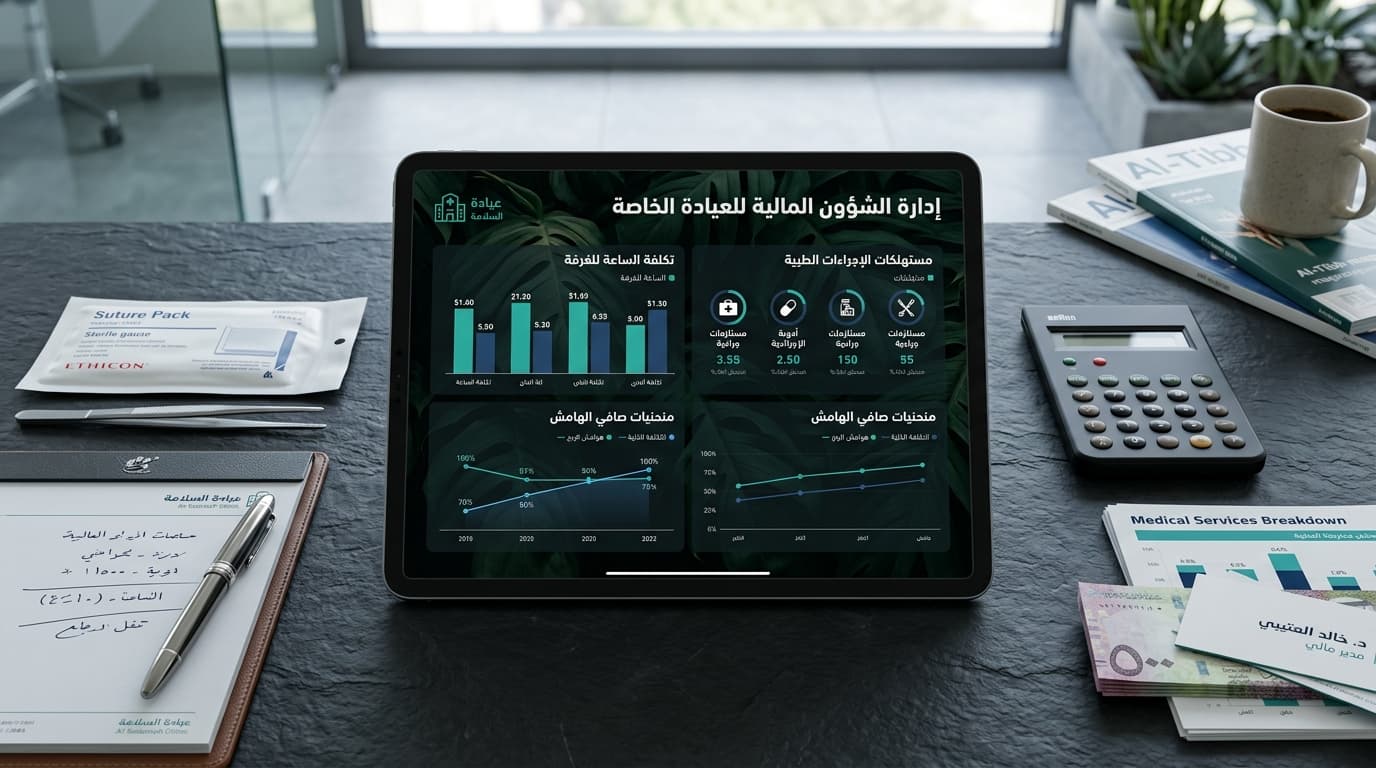
دليل تسعير الخدمات والإجراءات الطبية في العيادات الخاصة: كيف تحسب التكلفة الفعلية ومضاعفة الأرباح؟
دليل علمي وعملي للأطباء وأصحاب العيادات لتسعير الكشف والعمليات: حساب تكلفة ساعة تشغيل الغرفة، استهلاك المواد، وإهلاك الأجهزة لتفادي الخسائر ومضاعفة الأرباح.
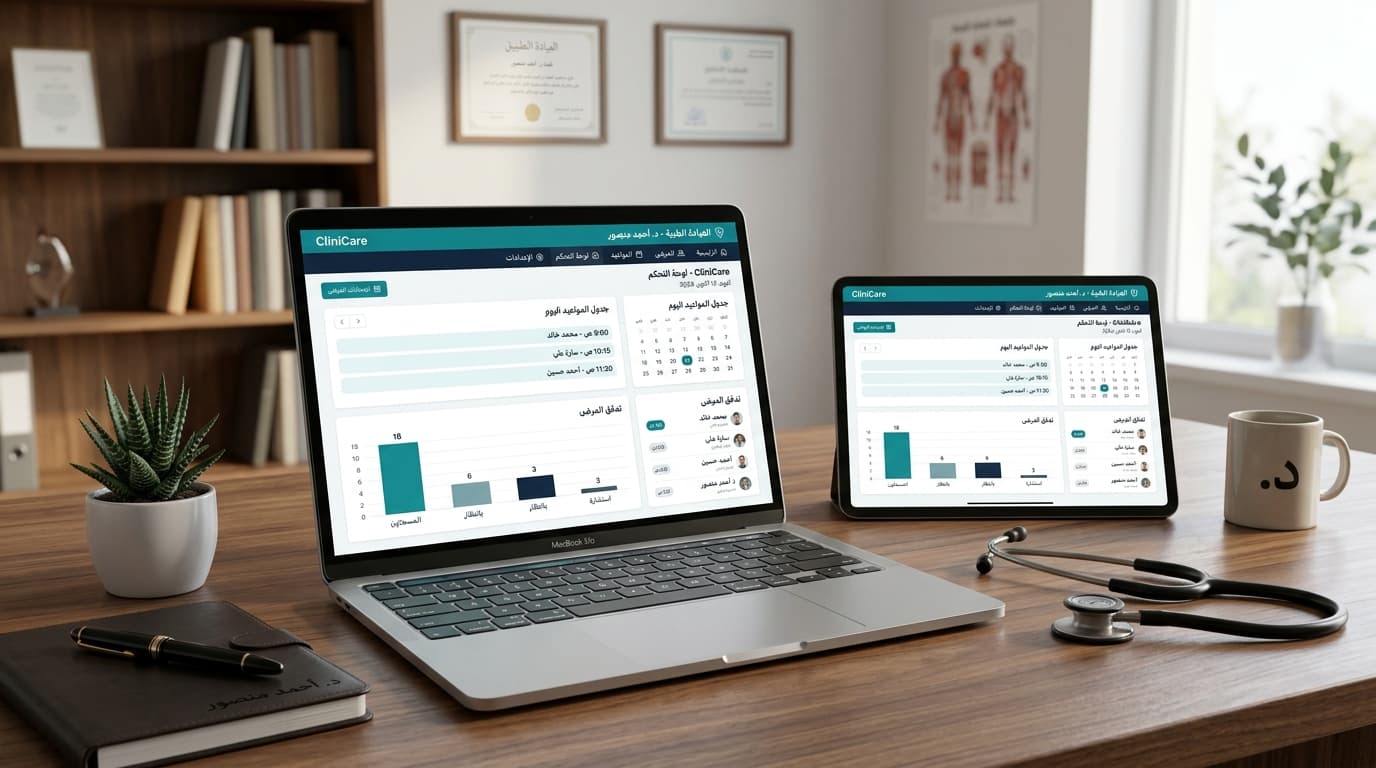
دليل اختيار أفضل برنامج إدارة عيادات ومراكز طبية 2026: 7 معايير عملية وتجربة مجانية
دليل شامل وعملي للأطباء وأصحاب المراكز الطبية لاختيار أفضل برنامج إدارة عيادات: تنظيم المواعيد بالواتساب، السجل الطبي EMR، الفاتورة الإلكترونية، وتفادي الأخطاء المكلفة.
كيف تصمم خطة دايت احترافية لمريض السمنة في أقل من دقيقتين؟
دليل عملي لأخصائيي التغذية لتسريع كتابة وتخصيص جداول الدايت وحساب السعرات والماكروز تلقائياً باستخدام مكتبة الوجبات الجاهزة في طبيب+.


