
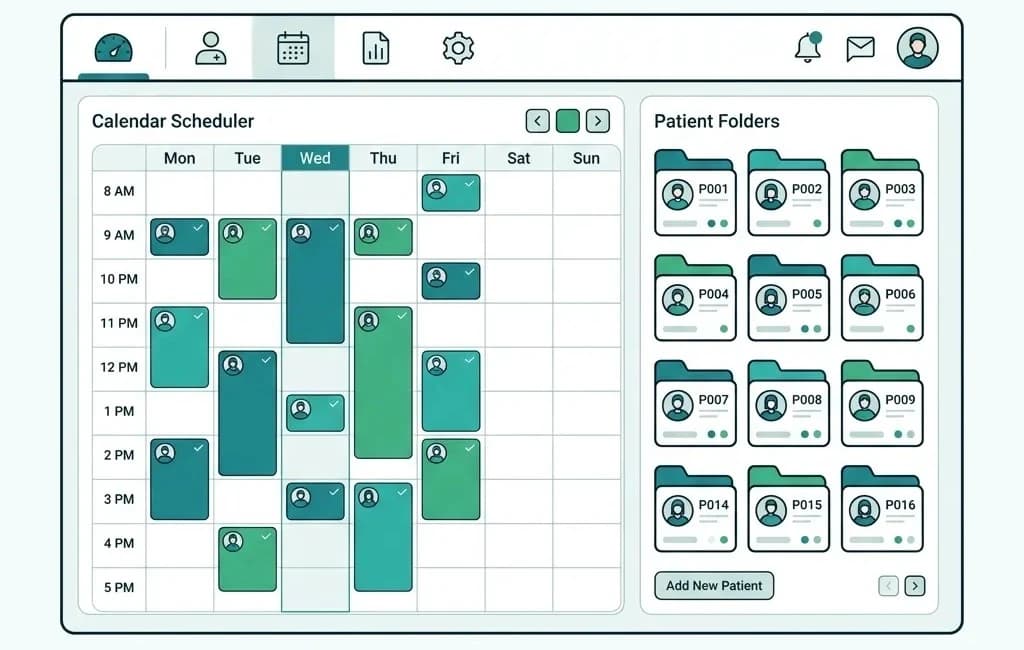
Executive Summary: EMR Data Migration is a strategic process requiring meticulous auditing, secure field mapping, and encrypted validation to preserve patient clinical history without care disruptions.
Table of Contents
- 1. Why Medical Practices Upgrade Legacy EMR Systems
- 2. Phase 1: Data Auditing & Cleansing Active Records
- 3. Phase 2: Schema Mapping & Clinical Terminology Alignment
- 4. Phase 3: Data Privacy Encryption & Security Compliance
- 5. Migration Validation Matrix & Sample Auditing
- 6. Go-Live Cutover Strategy & Zero-Downtime Execution
- 7. Seamless EMR Import via Tabeeb+ Desktop
1. Why Medical Practices Upgrade Legacy EMR Systems
Legacy medical software eventual reaches operational obsolescence, generating system crashes, sluggish loading, and compliance vulnerabilities. Upgrading to a modern EMR Software Solution restores operational speed and charting efficiency.
2. Phase 1: Data Auditing & Cleansing Active Records
Isolating active patient profiles from historical archives prevents database bloat and ensures high-priority clinical data like drug allergies and chronic conditions transfer accurately.
3. Phase 2: Schema Mapping & Clinical Terminology Alignment
Matching field structures between source and destination databases maps patient demographics, consultation notes, e-prescriptions, and medical media attachments precisely.
4. Phase 3: Data Privacy Encryption & Security Compliance
Deploying AES-256 local database encryption protects patient health information during extraction and transfer. Review regulatory guidelines at Healthcare Data Security Guide.
5. Migration Validation Matrix & Sample Auditing
| Validation Stage | Operational Objective | Success Benchmark |
|---|---|---|
| Dry Run Trial | Test 100 random patient profile migrations | 100% data fidelity with zero field dropping |
| Attachment Verification | Verify DICOM radiology & lab PDF scans | Direct file linking to patient ID key |
| Financial Balance Audit | Reconcile patient ledger balances | Zero discrepancy between old and new ledgers |
6. Go-Live Cutover Strategy & Zero-Downtime Execution
Executing final delta migrations outside consultation hours prevents record lock conflicts and ensures a smooth Monday morning launch.
7. Seamless EMR Import via Tabeeb+ Desktop
Tabeeb+ Desktop features intuitive migration wizards that ingest Excel, CSV, and legacy SQL databases with local precision and safety. Explore features at TabeebPlus EHR Software.


