Clinic Software and Receptionist Performance Tracking: Measuring Operational Productivity
In the dynamic and often demanding world of healthcare, operational efficiency is not merely a buzzword; it is the bedrock of patient satisfaction, staff morale, and sustainable growth. Clinics and medical practices face relentless pressure to optimize every facet of their operations, from patient scheduling to financial reconciliation. At the heart of this optimization lies robust clinic management software (or "برامج العيادات"). This foundational technology empowers healthcare providers to transcend traditional administrative hurdles, offering unprecedented insights into performance metrics, particularly concerning the pivotal role of the front desk and the overall productivity of healthcare staff.
The transition from manual processes to integrated digital solutions is no longer a luxury but a necessity for any clinic aspiring to thrive in the modern Arab world's competitive healthcare landscape, be it in Egypt, Saudi Arabia, or the UAE. This post will delve into how advanced clinic management systems facilitate meticulous receptionist performance tracking, streamline complex financial tasks like doctor commission software, and provide comprehensive analytics to elevate overall healthcare staff productivity. Understanding these capabilities is crucial for any practice seeking to enhance its administrative prowess and deliver superior patient care.
Table of Contents
- Introduction to Clinic Software and Operational Productivity
- The Critical Role of Clinic Receptionists in Patient Flow
- Key Performance Indicators (KPIs) for Clinic Receptionists
- Automating Doctor Commissions and Financial Workflows
- Measuring and Optimizing Overall Staff Productivity
- Comparison: Manual Tracking vs. Automated Clinic Software
- Frequently Asked Questions (FAQ)
- Conclusion & Call to Action
The Critical Role of Clinic Receptionists in Patient Flow
The clinic receptionist is the first point of contact for any patient, serving as the face and voice of the medical practice. Their interactions, efficiency, and accuracy set the tone for the entire patient experience. From the initial phone call or online inquiry to the final check-out and payment collection, receptionists coordinate the complex dance of patient flow.
In a traditional setup, receptionists are often overwhelmed with manual entry, paper calendars, and constant phone calls. This administrative bottleneck inevitably leads to longer patient wait times, scheduling errors, and frustrated staff. When a receptionist is bogged down by paperwork, they have less time to dedicate to patient care and experience. By implementing modern clinic management software, clinics can automate routine tasks, allowing receptionists to focus on patient interaction and quality service.
Furthermore, the data captured by receptionists at the front desk is critical for the clinic's clinical and financial operations. Inaccurate demographic entry, misspelled names, or incorrect insurance details can lead to claim rejections, delayed payments, and clinical safety issues. Therefore, tracking receptionist productivity and data accuracy is essential for maintaining practice health.
Key Performance Indicators (KPIs) for Clinic Receptionists
To measure and improve front-desk efficiency, clinics must establish clear Key Performance Indicators (KPIs). Clinic management systems provide the necessary tools to track these metrics automatically and objectively, eliminating guesswork.
1. Call Response and Booking Speed
How long does it take for a receptionist to answer a call or respond to a patient inquiry? How quickly can they schedule an appointment? High-performing front desks leverage integrated calendars and booking templates within clinic software to schedule patients in seconds. Tracking the average booking time helps identify bottlenecks and training needs.
2. Appointment Confirmation and No-Show Rates
A major drain on clinic revenue is patient no-shows. Efficient receptionists proactively confirm appointments and follow up on cancellations. Software like TabeebPlus automates this process via SMS or WhatsApp, but receptionist oversight remains key. Monitoring the receptionist's success rate in filling empty slots and keeping no-show rates low is a vital performance metric.
3. Data Entry Accuracy Rate
As mentioned, data integrity starts at the front desk. Medical software tracks edit histories and user logs, allowing managers to monitor the accuracy of patient profiles, insurance inputs, and billing records created by each receptionist. A high accuracy rate directly correlates with fewer billing claim rejections and smoother operations.
4. Patient Wait Time and Check-In Efficiency
How long do patients wait in the reception area before being called by the doctor? By tracking check-in and check-out timestamps, clinic software calculates the average wait time. Receptionists play a direct role in minimizing this by managing the flow, coordinating with nurses, and updating doctors on patient arrivals.
5. Copay and Outstanding Balance Collection
Financial leaks often occur due to missed copays or uncollected past balances at check-in or check-out. A key receptionist KPI is the collection rate of these balances. Modern billing systems alert receptionists to outstanding fees automatically, making collection straightforward and measurable.
Automating Doctor Commissions and Financial Workflows
In many clinics and medical centers across Egypt and the Gulf, doctors are paid based on a commission structure, which may depend on the number of consultations, specific procedures performed, or a percentage of overall revenue generated. Calculating these commissions manually at the end of each month is a tedious, error-prone task that often leads to disputes between doctors and clinic owners.
This is where specialized doctor commission software integrated into the clinic management system becomes indispensable. The benefits of automation include:
- Precision Calculations: The software automatically applies the pre-configured commission rules (fixed fee, percentage of consultation, tiered rates, or splits for procedures involving multiple specialists) to each invoice generated. This eliminates mathematical errors and ensures absolute accuracy.
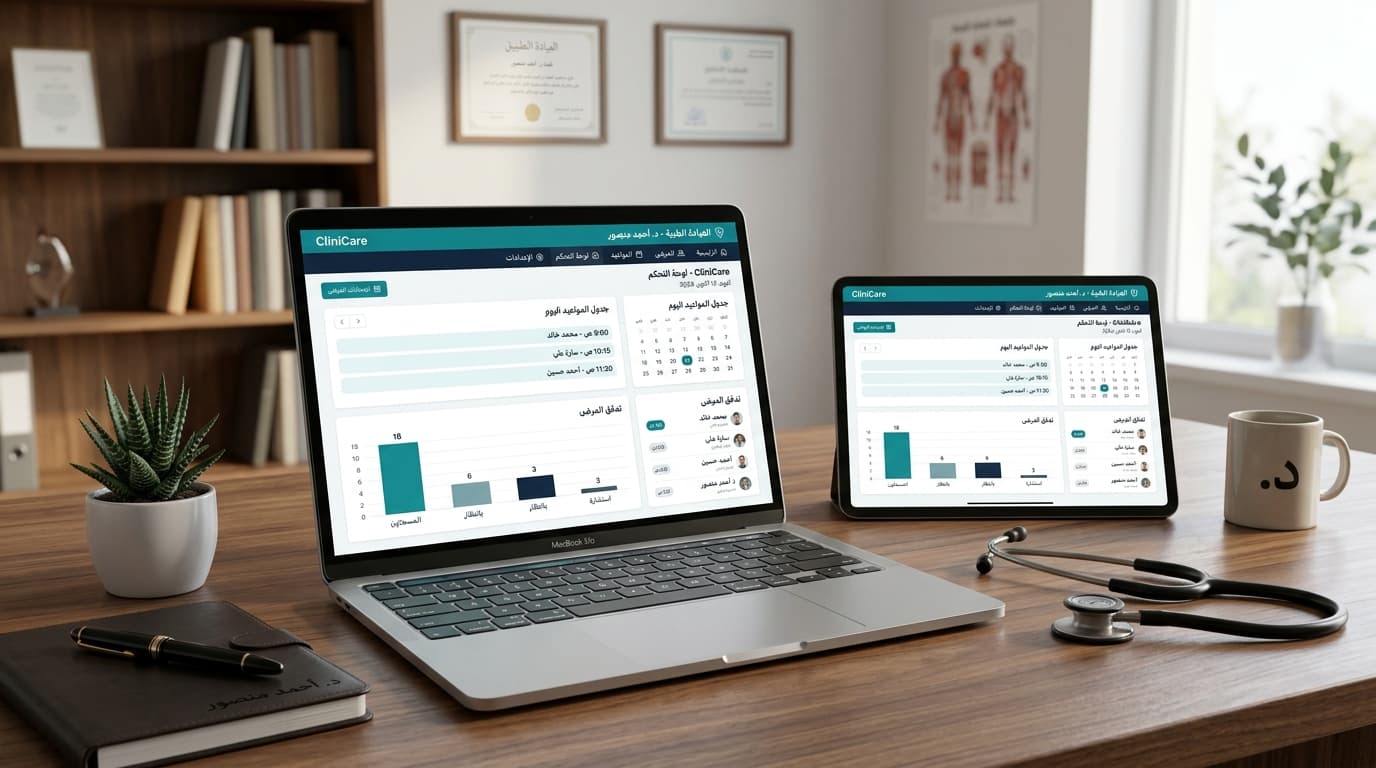
- Transparency and Trust: Doctors can access their personalized financial dashboards in real-time to view their accumulated earnings, patient counts, and pending settlements. This transparency fosters trust and reduces disputes.
- Time and Cost Savings: Admin staff no longer spend days compiling spreadsheets. The system generates detailed financial reports and commission sheets at the click of a button.
- Integration with Insurance and Billing: The software matches payments to commissions, ensuring that doctors are only paid on resolved billing invoices, protecting the clinic's cash flow.
Measuring and Optimizing Overall Staff Productivity
Beyond the front desk and the billing office, operational excellence requires measuring the productivity of all healthcare staff, including nurses, assistants, and lab technicians. A comprehensive clinic management system serves as the central hub for workflow tracking, helping managers identify operational bottlenecks and allocate resources effectively.
For example, tracking the time elapsed between patient check-in, triage by a nurse, consultation with the doctor, and final check-out provides a clear picture of the patient journey. If patients spend an average of 45 minutes waiting in triage, managers can investigate whether additional nursing staff are needed or if the check-in procedure can be simplified.
Additionally, task management modules within the software allow for digital clinical delegation. Doctors can assign post-consultation tasks to nurses (e.g., administering injections, dressing wounds, or conducting tests) electronically. The software tracks the completion times of these tasks, providing objective data on nurse productivity and ensuring no patient treatment step is missed.
Comparison: Manual Tracking vs. Automated Clinic Software
To visualize the contrast in operational efficiency, the table below highlights the differences between manual receptionist and financial tracking versus using an automated clinic management system like TabeebPlus:
| Operational Metric | Manual / Traditional Methods | Automated Clinic Management Software | |||
|---|---|---|---|---|---|
| Appointment Scheduling | Paper calendars, high risk of double-booking, slow phone coordination. | Integrated digital calendar, instant booking templates, zero double-booking. | Receptionist Performance | Subjective evaluation, lack of data on booking speed or no-show management. | Objective KPIs, detailed logs on check-in speed, call logs, and collection rates. |
| Doctor Commission Calculation | Manual spreadsheet entries, high error rate, time-consuming disputes. | Automated real-time calculation, custom commission structures, error-free logs. | |||
| Patient Wait Times | Unmeasured, reliance on patient complaints, crowded waiting rooms. | Precisely tracked via check-in/out timestamps, queue alert systems. | |||
| Data Integrity & Security | Paper receipts, risk of unauthorized access, manual auditing. | Role-based permissions, digital audit trails, encrypted cloud database. |
Frequently Asked Questions (FAQ)
Q1: Why is receptionist performance tracking important for a clinic's financial health?
A1: Receptionists manage the clinic's calendar and collect initial patient fees. By tracking their performance, clinics can reduce no-shows (maximizing calendar utilization), increase copay collections, and prevent billing claim rejections due to data entry errors, directly improving the clinic's bottom line.
Q2: How does clinic software prevent disputes over doctor commissions?
A2: The software calculates commissions automatically based on pre-defined parameters and links them directly to patient invoices. Doctors can log in to view their financial dashboards in real-time, providing transparency and removing the human error that leads to disputes.
Q3: Can we track patient wait times using receptionist logs?
A3: Yes. When a receptionist checks a patient in on the system, a timestamp is created. Another timestamp is logged when the patient enters the doctor's office and checks out. The software calculates the difference, providing a precise metric for patient wait times.
Q4: How do user permissions protect sensitive financial and staff performance data?
A4: Clinic management systems feature role-based access control. Receptionists only see scheduling and basic patient details, while doctors access clinical charts and their own commission reports. Executive dashboards, financial statements, and staff performance metrics are restricted to administrators.
Q5: Can the software track receptionist telephone performance?
A5: Yes, modern systems integrate with VoIP phone services, tracking call volumes, missed calls, response times, and average call duration for each receptionist, compiling these into performance dashboards.
Conclusion & Call to Action
Operational productivity is the cornerstone of any successful medical practice. Implementing robust clinic management software enables healthcare clinics to monitor receptionist efficiency, streamline doctor commission workflows, and optimize overall staff productivity. By relying on objective data and automated systems, clinic owners can make informed decisions, eliminate administrative leaks, and elevate the patient experience.
TabeebPlus provides an all-in-one cloud platform that simplifies clinical workflows and offers powerful management analytics tailored to practices in Egypt, Saudi Arabia, and the Gulf. Embrace the future of clinic operations and eliminate manual administrative overhead today.
Request Your Free TabeebPlus Demo Today to start measuring and optimizing your clinic's operational performance.