Medical Records & Systems
Key terms and definitions in the medical records & systems category.
EMR (Electronic Medical Record)
An Electronic Medical Record (EMR) is a digital chart of a patient's medical history within a single clinic, containing visits, prescriptions, and test results.
EHR (Electronic Health Record)
An Electronic Health Record (EHR) spans multiple care settings and enables sharing a patient's record across clinics, hospitals, and labs.
PHR (Personal Health Record)
A Personal Health Record (PHR) is maintained by the patient and holds their health data, vaccinations, and medications.
Practice Management Software
Practice Management Software handles scheduling, billing, and daily administrative operations of a medical practice.
HMS (Hospital Management System)
A Hospital Management System (HMS) covers inpatient wards, beds, surgery, and financial administration of hospitals.
HIS (Health Information System)
A Health Information System (HIS) collects, stores, and analyzes healthcare data at practice or regional level.
RIS (Radiology Information System)
A Radiology Information System (RIS) manages imaging orders, schedules, and reports linked to patient images.
LIS (Laboratory Information System)
A Laboratory Information System (LIS) tracks lab specimens and results and links them to the patient's record.
PACS (Picture Archiving and Communication System)
PACS stores and shares medical images digitally, replacing physical film for radiology.
Clinical Care & Prescribing
Key terms and definitions in the clinical care & prescribing category.
E-Prescription (Electronic Prescription)
An electronic prescription is a digital, signed order that reduces handwriting errors and speeds up dispensing.
Telemedicine
Telemedicine delivers consultations and visits via video or phone without the patient attending in person.
Teleradiology
Teleradiology transmits imaging studies to a specialist for remote interpretation.
Patient Portal
A patient portal is a secure interface where patients view appointments, results, and message their clinic.
SOAP Note
A SOAP note structures clinical documentation into Subjective, Objective, Assessment, and Plan.
Chronic Disease Management
Chronic disease management follows diabetic, hypertensive, and similar patients with regular visits and medications.
Operations & Scheduling
Key terms and definitions in the operations & scheduling category.
Appointment Scheduling
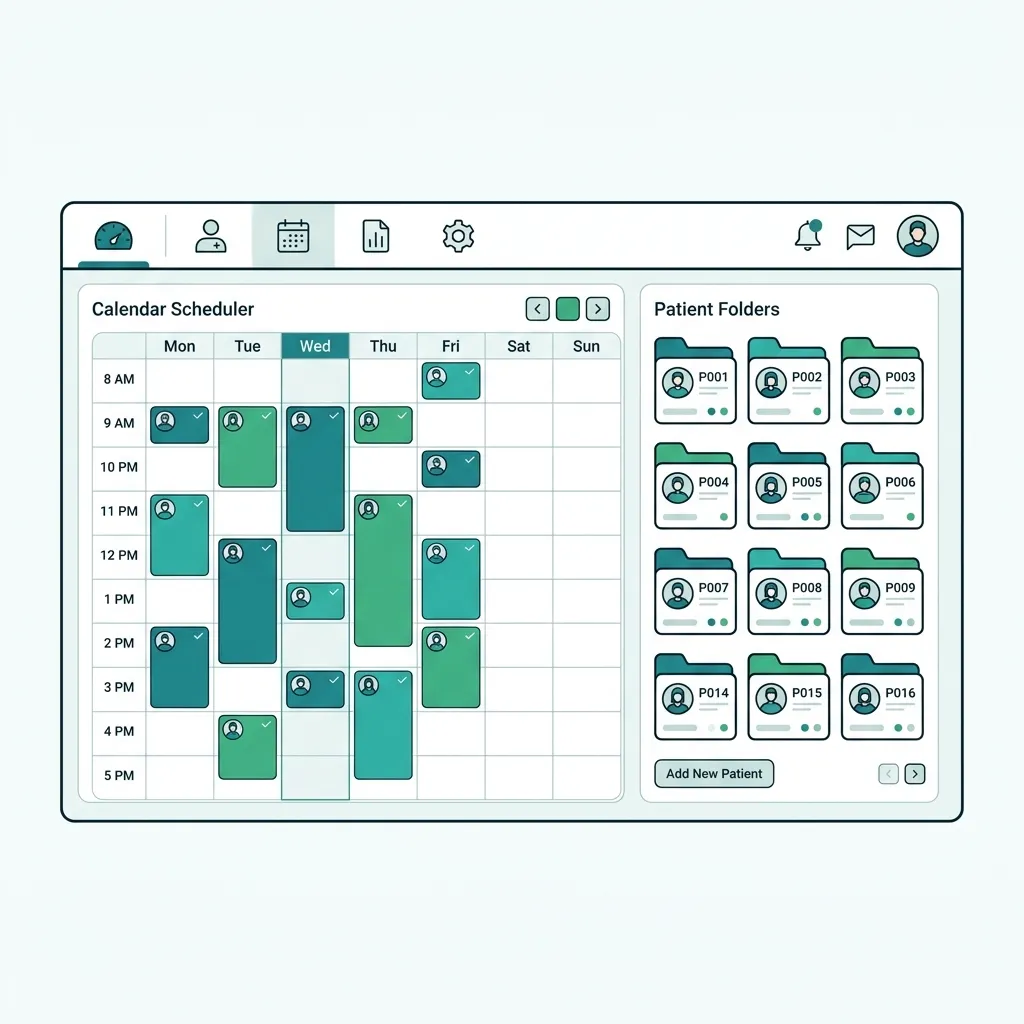
Appointment scheduling organizes doctor calendars and prevents double-booking via a digital agenda.
No-show Rate
The no-show rate is the share of patients who miss appointments without canceling in advance.
Queue Management
Queue management organizes patient waiting using screens and vocal calling to cut wait times.
Multi-branch Management
Multi-branch management unifies several clinics' data under one platform with separate permissions.
Inventory Management
Inventory management tracks drugs and supplies with expiry alerts to prevent shortages.
Billing & Compliance
Key terms and definitions in the billing & compliance category.
Medical Billing
Medical billing issues invoices for clinical services and calculates discounts, insurance, and tax.
Claim (Insurance Claim)
An insurance claim requests reimbursement of treatment cost from the payer per policy terms.
EOB (Explanation of Benefits)
An Explanation of Benefits (EOB) shows what the insurer covered and what the patient owes.
Copay
A copay is a fixed amount the patient pays at each visit under their insurance plan.
Deductible
A deductible is the amount a patient pays out of pocket before insurance begins to pay.
ZATCA E-Invoicing
ZATCA e-invoicing (phase 2) in Saudi Arabia requires issuing compliant electronic tax invoices.
PDPL (Personal Data Protection Law)
Saudi Arabia's Personal Data Protection Law (PDPL) governs collection and processing of personal data.
GDPR (General Data Protection Regulation)
The GDPR regulates privacy and data protection for EU citizens' personal data.
HIPAA (Health Insurance Portability and Accountability Act)
HIPAA is a US law protecting patient health information privacy and security standards.
ISO 27001
ISO 27001 is the international standard for information security management systems.
SOC 2
SOC 2 is an audit report assessing a service provider's security controls.
Clinic Automation
Key terms and definitions in the clinic automation category.
Clinic Automation (أتمتة العيادات)
Clinic automation is the comprehensive digital transformation of clinic operations — from paper-based processes to a smart digital platform connecting scheduling, EMR, billing, insurance, and patient communication in one system.
Clinic Operating System
A clinic operating system is the foundational platform all clinic operations run on — connecting departments and data in a unified system.
Workflow Automation
Workflow automation is the automatic execution of repetitive tasks such as billing, insurance tracking, and sending reminders.
Revenue Cycle Management (RCM)
Revenue Cycle Management tracks the patient journey from booking to full payment collection while minimizing lost claims.
Patient Self-scheduling
Patient self-scheduling lets patients book appointments via web or WhatsApp without calling the clinic.
Automated Reminders
Automated reminders are automatic notifications sent to patients before appointments to reduce no-show rates.
Technology & Infrastructure
Key terms and definitions in the technology & infrastructure category.
Cloud Computing
Cloud computing runs software over the internet with data hosted on the provider's servers.
On-premise
On-premise software runs on the clinic's own servers and is managed in-house.
SaaS (Software as a Service)
SaaS delivers software via subscription without local installation.
API (Application Programming Interface)
An API lets different systems exchange data automatically.
HL7 / FHIR
HL7 and FHIR are standards for exchanging healthcare data between systems.
Encryption
Encryption scrambles data so it is unreadable without authorized keys.
Backup
A backup stores a copy of data for recovery after loss or failure.
Digital Signature
A digital signature is an authorized electronic attestation on prescriptions and reports.
Audit Trail
An audit trail logs every change to records and invoices for accountability.
Frequently Asked Questions
What is the difference between EMR and EHR?
An EMR lives within a single clinic, while an EHR shares the patient's data across multiple care settings so different providers can access it.
What is clinic automation?
Clinic automation is the comprehensive digital transformation of clinic operations — from scheduling and EMR to billing, insurance, and patient communication — in one smart platform.
Is e-invoicing mandatory in Saudi Arabia?
Yes. Under ZATCA phase 2, taxable businesses must issue compliant electronic tax invoices.
What is the recognized data-security standard?
The most common are ISO 27001 for information security management and SOC 2 for cloud service-provider control reports.
What is the difference between cloud and on-premise systems?
Cloud runs over the internet with the provider handling backups, while on-premise runs on the clinic's own servers and needs in-house management.
What is an API and why does it matter for clinics?
An API lets your clinic software exchange data automatically with labs, insurers, and payment gateways.
Read also
Get More Free Resources
Subscribe to our newsletter for the latest guides on clinic management and digital health.